Your car's steering felt fine last week. Then you hit that crater-sized pothole on Nepean Highway, or clipped a kerb parking near the Mentone shops. Now the car drifts slightly to one side when you take your hands off the wheel on a flat road, and the steering wheel sits a few degrees off-centre.
A wheel alignment is one of the cheapest repairs on a car. Leave it alone and it turns into one of the most expensive, because the tyres wear out months or years early. We see this at Chandos Auto in Cheltenham most weeks – one kerb strike or bad pothole, followed up months later by a set of tyres that should have lasted another year. This guide covers what a wheel alignment fixes, how to spot when you need one, and how to tell the difference between a real recommendation and a chain store upsell.


What a wheel alignment does
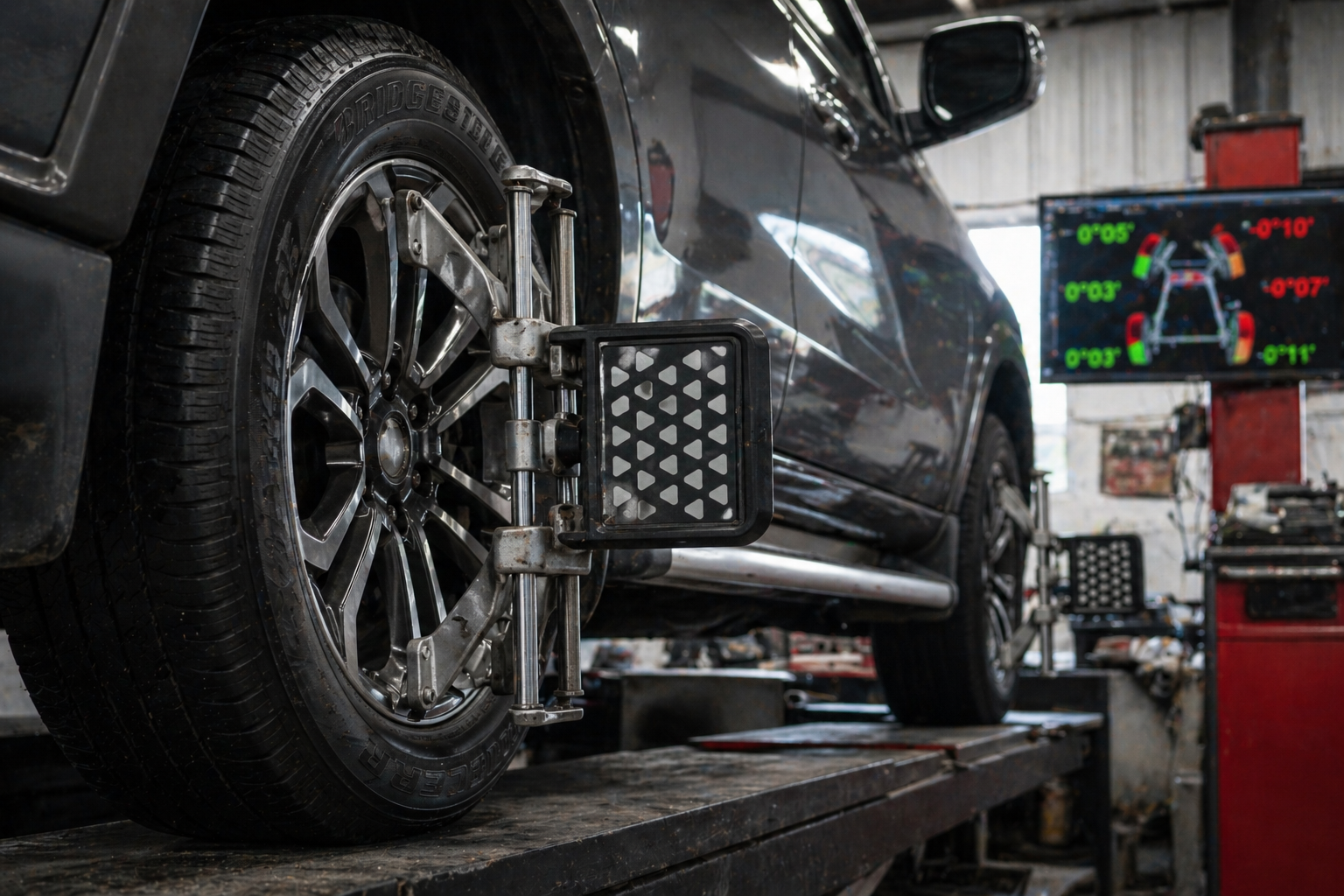
A wheel alignment adjusts three angles on each wheel so the tyres sit flat on the road and the steering behaves predictably. Those angles are camber, caster, and toe.
- Camber is how far the top of the wheel tilts in or out when you look at the car from the front. Too much tilt and the tyre runs on one edge instead of the full tread, wearing that edge out fast.
- Caster is the angle of the steering axis when you look at the wheel from the side. It affects how heavy the steering feels, how stable the car is at speed, and whether the wheel returns to centre after a turn.
- Toe is whether the front of each wheel points slightly inward or outward when you look from above. Wrong toe settings chew tyres faster than any other alignment fault.
When all three angles match the car maker's specs, the tyres wear evenly, the steering feels predictable, and you save fuel. When one is out, you feel it in the steering and you see it in the tyres.
Wheel alignment is not the same as wheel balancing. Balancing corrects small weight differences around each tyre and wheel, which fixes vibration at speed. Alignment adjusts the angles. They are two separate services, priced separately, and a car can need one without needing the other.
Signs your car needs a wheel alignment
A car out of alignment usually gives you one or more of the signs below. Most drivers notice the steering or the tyres first.
- The car pulls to one side on a flat, straight road. Find a quiet, level stretch and take your hands off the wheel for a second or two. If it consistently drifts the same way, alignment is a likely cause. A pull that only happens under braking is a brake issue, not alignment.
- The steering wheel sits off-centre when you're going straight. When a car tracks true, the logo or spokes should sit level. A wheel that rests rotated a few degrees left or right on a flat road is a clear sign the toe is out.
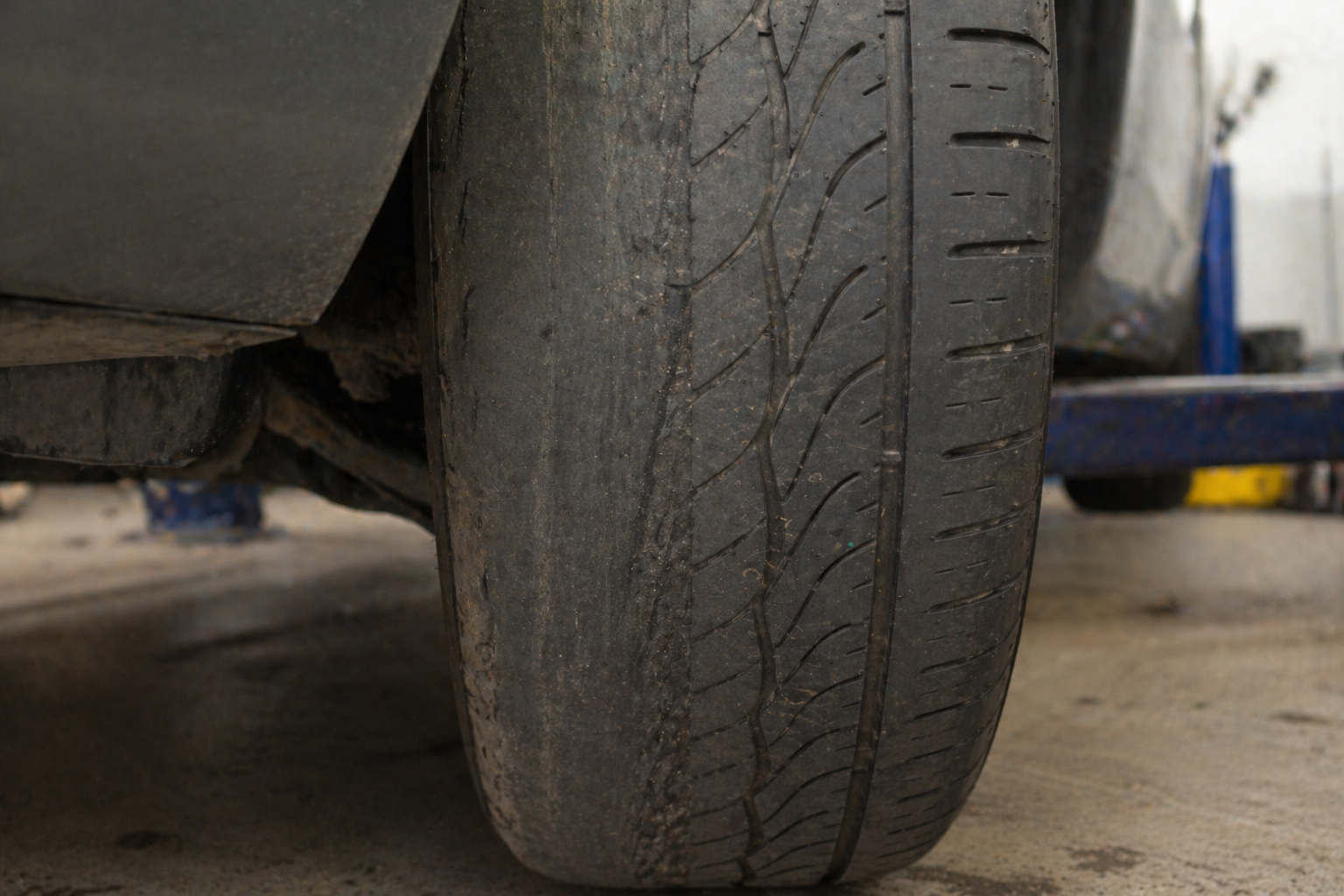
- Uneven tyre wear. Run your hand across each front tyre. Wear that's heavier on one edge, or feathered (sharp on one side of each tread block and smooth on the other), points to alignment rather than normal use.
- Vibration at speed. This is usually wheel balancing, not alignment. Balancing issues show up most strongly between 90 and 110 km/h. If the vibration only happens when you brake, that's typically warped brake rotors, which we cover in our article on brake shudder.
- The steering feels vague or wanders. If the car needs constant small corrections to hold a lane on a straight road, and there's no wind to blame, alignment is worth checking.
What knocks wheels out of alignment?
Most alignment problems come from impact damage. A pothole taken at 60 km/h transfers enough force through the suspension to shift adjustment components. Bayside's older suburban streets, sections of Nepean Highway, and the feeder roads off the Frankston line all hold their share of craters. A solid kerb strike while parking does the same thing.
The other common cause is component wear. Bushes perish over time, ball joints develop play, and tie rod ends get sloppy. When those parts move in ways they shouldn't, the alignment angles drift. No impact needed – it's just age and kilometres.
Alignment also shifts after suspension work. Lift kits, lowering springs, and anything that changes ride height changes the alignment angles by default. A workshop that fits suspension components and doesn't follow up with an alignment has left the job unfinished.
What a wheel alignment won't fix
An alignment fixes the angles. It doesn't fix anything else that can feel similar or wear tyres. These are the common confusions.
- Tyres that are already worn unevenly. Alignment stops the wear getting worse. It doesn't restore rubber that's already gone. A feathered or cupped edge stays rough even after the angles are set right.
- Worn suspension components. If a ball joint, bush, or tie rod end is past its service life, a fresh alignment will drift again within weeks. The worn part has to be replaced first, and the shop should flag this before they do the alignment.
- Wheel balancing problems. Different service, different symptoms. Vibration at highway speeds is almost always balancing or a damaged tyre, not alignment.
- Vibration under braking. That's typically warped brake rotors or failing pads. Our brake shudder article explains how to tell the difference.
- Steering rack faults. A wandering or loose steering feel can also come from worn rack bushes, internal rack wear, or play in the intermediate shaft. Alignment won't cover any of that.
A workshop that does an alignment on a car with worn suspension components isn't doing the customer a favour. The job won't hold. Good shops check the suspension first and tell the customer what needs to happen in what order.
Two-wheel or four-wheel alignment: which do you need?
Most modern cars need a four-wheel alignment. If the car has independent rear suspension – which includes most sedans built since 2000, most all-wheel-drive cars, and most SUVs – the rear wheels can be adjusted independently and should be checked every time.
A two-wheel alignment, front only, is for older cars with a live rear axle and no rear adjustment. That's a narrow slice of the current fleet: some older commercial vehicles, some basic rear-wheel-drive sedans from the 1990s, and a handful of light trucks.
Some workshops quote a four-wheel alignment on a vehicle that only takes a front alignment. That's a flag. If you're unsure what your car needs, check the owner's manual or ask the workshop to show you the rear adjustment points on your specific vehicle before they quote the work.
Louder than usual exhaust noise
How much does a wheel alignment cost in Melbourne?
A wheel alignment in Melbourne typically costs between $60 and $250, depending on your vehicle and the type of alignment. Here's how the pricing breaks down across the market.
| Service | Typical price range |
|---|---|
| Two-wheel (front) alignment | $60–$120 |
| Four-wheel alignment, standard passenger car | $100–$200 |
| Four-wheel alignment, 4WD, lifted, or European vehicle | $150–$250+ |
| Performance or custom alignment on modified suspension | $200–$350+ |
These ranges reflect general market pricing from chain stores, tyre retailers, and independent workshops across Melbourne, and are not specific to Chandos Auto. Your quote depends on your vehicle, its condition, and the workshop.
A few things push the price up. Lift kits and raised vehicles take longer to set up on the alignment rig. Larger wheels and low-profile tyres require finer adjustment. Adjustable aftermarket suspension adds more measurement points. Seized adjustment bolts have to be freed or replaced, which is extra labour. A workshop quoting significantly above these ranges on a standard passenger car should be able to explain why in plain English.
How to tell if you're being upsold
Alignment is a legitimate service when there's a real reason for it. The recommendation is trustworthy when:
- The workshop shows you the wear on your tyres, and the pattern matches what alignment causes
- There's a plausible trigger – a recent kerb strike, a bad pothole, replaced suspension parts, or fresh tyres
- You're offered an alignment check first, and the adjustment work is quoted separately once the readings come back
The recommendation is worth questioning when:
- The "free alignment check" at a chain store always seems to find something, regardless of how your car actually drives
- Alignment gets added to every service by default, with no mention of symptoms or evidence
- A four-wheel alignment is quoted on a car that only takes a front alignment
- You're pushed to do the work right now with no safety evidence on the table
A car that tracks straight on a flat road, has even tyre wear, and steers predictably is almost certainly aligned within spec. Every two to three years as preventive maintenance is a reasonable baseline for most drivers. Any sooner than that without symptoms is usually unnecessary. After a big impact or suspension work, go earlier.
When to book a wheel alignment
These are the triggers that make a wheel alignment worth booking:
- After hitting a significant pothole, kerb, or speed hump at pace
- After replacing suspension components (ball joints, tie rod ends, bushes, shocks, or springs)
- After fitting new tyres, so the fresh rubber doesn't start wearing unevenly on day one
- When any of the warning signs above show up
- Every two to three years as preventive maintenance
If none of those apply, skip it. The money is better spent on something that actually needs doing.
Wheel alignment FAQ
A four-wheel alignment usually takes 30 to 60 minutes on a standard car. Vehicles with seized adjustment bolts, lift kits, or unusual suspension setups can take longer. A lifted 4WD on adjustable aftermarket suspension can run to 90 minutes or more.
Yes, slightly, if the car was meaningfully out. Misaligned wheels drag against the road, which makes the engine work harder. In most real-world cases the saving is a few per cent of fuel use, which adds up over a year but isn't something you'll feel at every fill. If the alignment is badly off, the saving can climb higher. The bigger financial win from alignment is usually tyre life, not fuel.
No. Wheel alignment is not a line item in the Victorian roadworthy standards under VSI 26. Two related things can still cause an RWC to fail, though. Tyres worn below 1.5 mm tread depth at any point on the normal contact area of the tread will fail, and uneven wear from misalignment is a common cause. A vehicle that doesn't drive straight without wandering or pulling will also fail. So the alignment itself isn't inspected, but the symptoms of a car left out of alignment often are.
You can, but the tyre bill is growing every kilometre. A mild pull isn't a safety emergency. A car that wanders on the freeway, or has a badly worn tyre edge, is a different story. Grip at the worn edge is compromised, especially in the wet. If the pull is strong enough to need constant steering correction, get it checked that week.
Usually no. Most tyre shops quote tyres, balancing, and alignment as separate items. Some run package deals that bundle them. Always ask before you book. Putting new tyres on a misaligned car means the fresh rubber starts wearing unevenly from the first drive home.
Keep your car tracking straight
A wheel alignment isn't something your car needs on a fixed schedule. It's something it needs when symptoms show up, or after an event that could have knocked the angles out. If the steering is pulling, the wheel sits off-centre, or one tyre edge is wearing fast, book a check before the tyres are a write-off. If the car is driving straight and the tyres look even, save the money.
If you're driving around Cheltenham, Mentone, or broader Bayside and want a straight answer on your car, book a precision wheel alignment check at Chandos Auto. We'll tell you what it needs, show you why, and leave out what it doesn't.