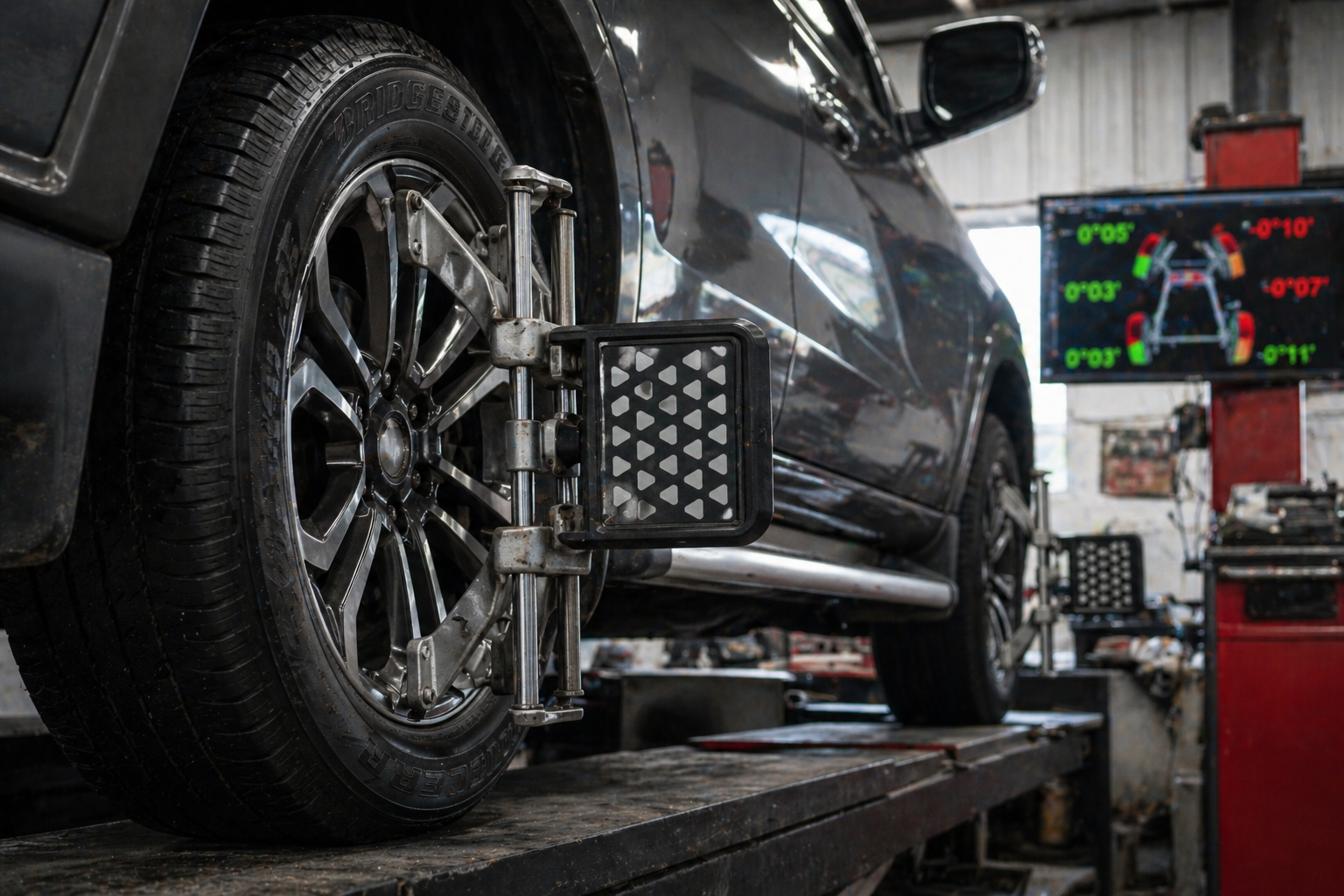
A wheel alignment adjusts three angles on each wheel so the tyres sit flat on the road and the steering behaves predictably. Those angles are camber, caster, and toe.
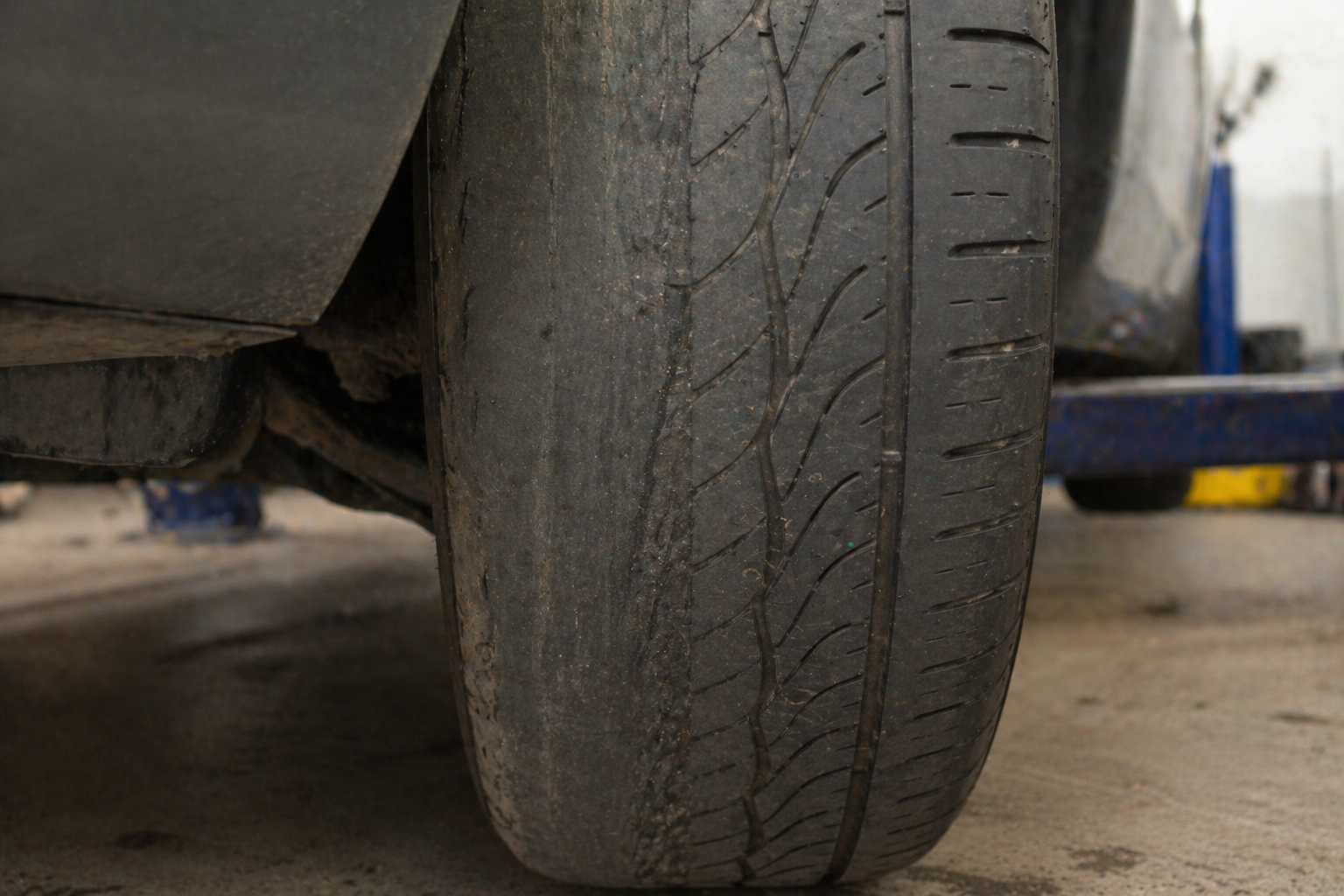
- Camber is how far the top of the wheel tilts in or out when you look at the car from the front. Too much tilt and the tyre runs on one edge instead of the full tread, wearing that edge out fast.
- Caster is the angle of the steering axis when you look at the wheel from the side. It affects how heavy the steering feels, how stable the car is at speed, and whether the wheel returns to centre after a turn.
- Toe is whether the front of each wheel points slightly inward or outward when you look from above. Wrong toe settings chew tyres faster than any other alignment fault.
When all three angles match the car maker's specs, the tyres wear evenly, the steering feels predictable, and you save fuel. When one is out, you feel it in the steering and you see it in the tyres.
Wheel alignment is not the same as wheel balancing. Balancing corrects small weight differences around each tyre and wheel, which fixes vibration at speed. Alignment adjusts the angles. They are two separate services, priced separately, and a car can need one without needing the other.