Chandos Autos

Do you need new brake rotors, or just new pads?

You book in because the brakes are noisy, the pedal feels rough, or a service report says the pads are low. Then the quote comes back with brake pads and rotors. It is a fair question: are the rotors really needed, or are you being sold more than the car needs? 

The short answer is simple. Brake pads are the friction material that wears first. Brake rotors are the metal discs the pads clamp onto. New pads may be enough if the rotors are still thick, smooth, and within specification. Rotors may need machining or replacement if they are too thin, scored, cracked, heat-damaged, or uneven. 

For brake repairs in Cheltenham, Chandos Auto checks the pads, rotors, callipers, slides, and hydraulic parts before making that call. The decision should come from measurement and inspection, not guesswork.

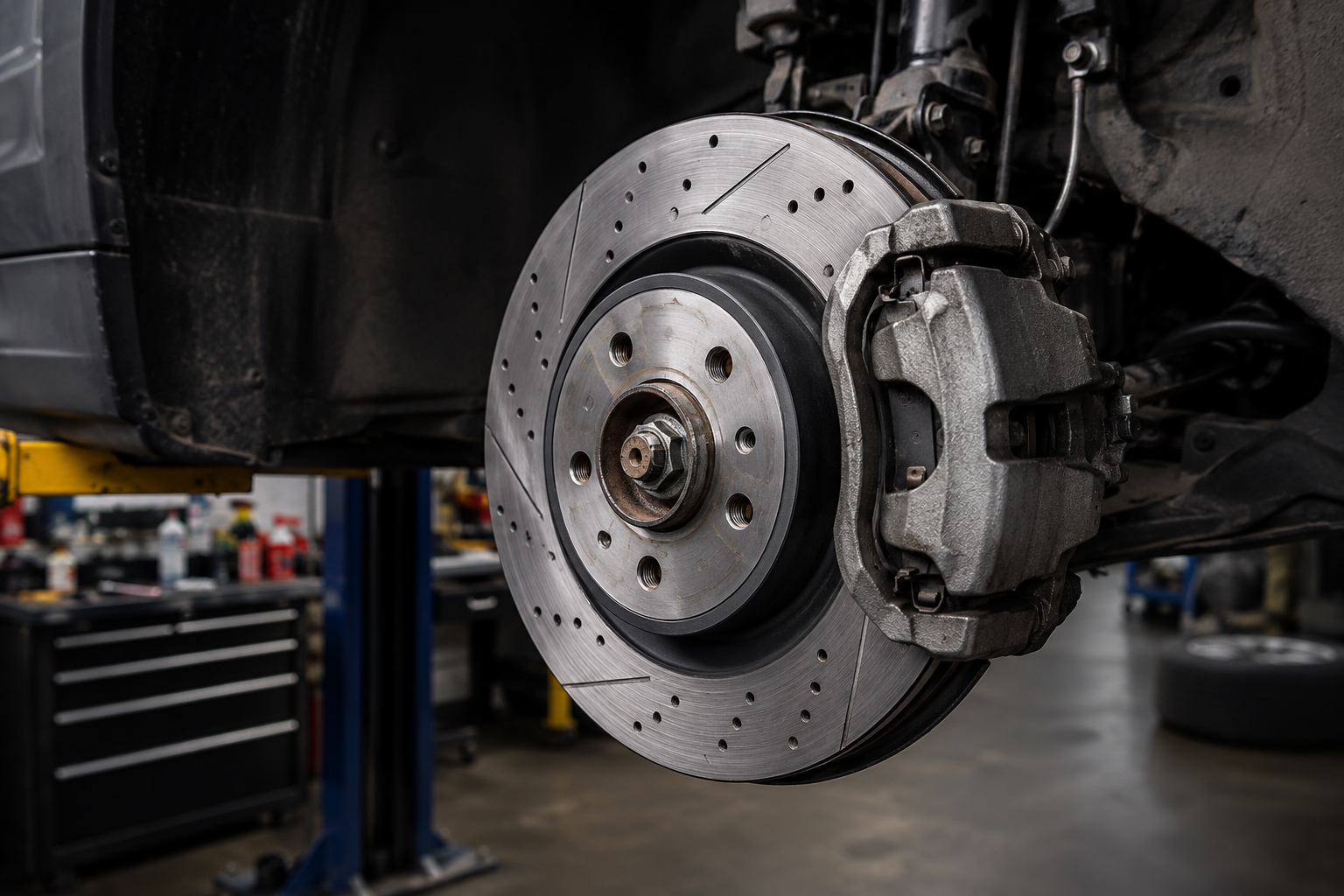
Workshop close-up of brake components

What is the difference between pads and rotors?

Brake pads are replaceable friction blocks. When you press the brake pedal, the pads clamp against the rotor to slow the wheel. 

Brake rotors are the round metal discs behind your wheels. They spin with the wheel, so they must stay even, smooth, and thick enough to handle heat.

PartWhat it doesHow it wears
Brake padsGrip the rotor to slow the carFriction material wears down
Brake rotorsGive the pads a flat surface to gripMetal wears, scores, heats, or becomes uneven
CallipersPush the pads onto the rotorSlides can stick, causing uneven wear

Pads usually wear faster than rotors. That does not mean the rotors can be ignored. A damaged rotor surface can make new pads noisy, rough, or short-lived. 

When are brake pads alone enough?

Brake pads alone may be enough when the rotors are still in good condition. This is usually a measured decision, not a visual guess from outside the wheel. 

  • The pads are worn, but the rotors are smooth. 
  • Rotor thickness is still within the manufacturer's specification. 
  • There is no shudder, pulsing, or vibration under braking. 
  • The rotor face has no deep grooves or heat spotting. 
  • The callipers and slide pins are moving freely. 

If the pads have worn normally and the rotors still measure safely, replacing the pads may be all the car needs. 

When do brake rotors need machining or replacing?

Brake rotors need machining or replacement when their condition would affect braking, shorten pad life, or fall outside safe limits. Machining removes a thin layer of metal to restore a smoother braking surface. 

What the mechanic findsWhat it usually meansLikely decision
Deep groovesPads have worn into the rotorMachine or replace
Rotor below minimum thicknessThere is not enough safe metal leftReplace
Shudder through steering wheelRotor thickness variation or runout is possibleInspect, machine, or replace
Heat spots or blueingThe rotor surface has overheatedOften replace
Lip on rotor edgeNormal wear or heavy wear, depending on depthMeasure first

Not every shudder means a rotor is warped. Brake vibration can also come from uneven pad deposits, wheel bearing play, suspension wear, or a sticking calliper. The inspection needs to find the cause, not just replace the first part that sounds likely. 

Why do mechanics measure rotors before deciding?

Mechanics measure rotors because every disc has a minimum safe thickness. Once the rotor is too thin, it cannot safely absorb heat or be machined again. 

  • Thickness: is the rotor still above the minimum specification? 
  • Runout: does the rotor wobble side to side as it turns? 
  • Surface condition: is it scored, cracked, glazed, or heat-spotted? 
  • Thickness variation: is the rotor the same thickness around the braking surface? 

A rotor can look usable but still measure too thin. It can also be thick enough but too uneven to give smooth braking. 

What can happen if you fit new pads to bad rotors?

Brake rotors need machining or replacement when their condition would affect braking, shorten pad life, or fall outside safe limits. Machining removes a thin layer of metal to restore a smoother braking surface. 

What the mechanic findsWhat it usually meansLikely decision
Deep groovesPads have worn into the rotorMachine or replace
Rotor below minimum thicknessThere is not enough safe metal leftReplace
Shudder through steering wheelRotor thickness variation or runout is possibleInspect, machine, or replace
Heat spots or blueingThe rotor surface has overheatedOften replace
Lip on rotor edgeNormal wear or heavy wear, depending on depthMeasure first

Not every shudder means a rotor is warped. Brake vibration can also come from uneven pad deposits, wheel bearing play, suspension wear, or a sticking calliper. The inspection needs to find the cause, not just replace the first part that sounds likely. 

Louder than usual exhaust noise

Why do mechanics measure rotors before deciding?

Mechanics measure rotors because every disc has a minimum safe thickness. Once the rotor is too thin, it cannot safely absorb heat or be machined again. 

  • Thickness: is the rotor still above the minimum specification? 
  • Runout: does the rotor wobble side to side as it turns? 
  • Surface condition: is it scored, cracked, glazed, or heat-spotted? 
  • Thickness variation: is the rotor the same thickness around the braking surface? 

A rotor can look usable but still measure too thin. It can also be thick enough but too uneven to give smooth braking.

What can happen if you fit new pads to bad rotors?

New pads fitted to bad rotors can wear unevenly, become noisy, and fail to bed in properly. Bedding-in is the process where the new pad surface mates cleanly to the rotor. 

  • Squealing or scraping soon after the repair. 
  • Shudder through the steering wheel or brake pedal. 
  • Poor brake feel. 
  • Pads wearing faster than expected. 
  • Uneven contact between the pad and rotor. 

If the rotors are scored or near their limit, fitting pads alone may look cheaper on the day but waste the new pads sooner.

How much does brake pad and rotor replacement cost?

Brake pad replacement cost varies by vehicle, parts quality, rotor type, labour time, and whether one or both axles are being done. 

Brake workTypical range
Pads only on one axleAbout $180 to $450
Pads and rotors on one axleAbout $350 to $750
Larger SUVs, utes, European, or performance vehiclesOften higher

These are not Chandos-specific prices. They are broad market ranges only. The right figure depends on the vehicle and what the inspection finds. 

If a quote includes both brake pads and rotors, the useful question is not just 'how much does it cost to change brake pads?' It is 'what did the rotors measure, and why are they being machined or replaced?' 

What should Cheltenham drivers ask before approving brake work?

A good brake quote should be easy to explain. If it is not clear why rotors have been included, ask for the reason before approving the work. 

  • Have the rotors been measured? 
  • Are they below minimum thickness? 
  • Is machining possible, or is replacement the safer call? 
  • Are both sides being replaced as a pair? 
  • Are the callipers and slides being checked too? 
  • Could the shudder involve suspension or wheel bearing wear? 

For Bayside and south-east Melbourne drivers, stop-start traffic, short trips, and regular braking on roads like Nepean Highway and Bay Road can be harder on brakes than steady freeway driving. 

Frequently Asked Questions

Yes. Brake pads can be replaced without replacing rotors if the rotors are smooth, thick enough, and wearing evenly. Pads-only replacement is common when the rotors are still within specification. 

No. Brake rotors do not always need machining. If the surface is clean and even, and the rotor thickness is well within specification, machining may not be needed. 

Machining is only useful when there is enough metal left and the problem is suitable for machining. If the rotor is too thin, cracked, badly heat-damaged, or not suitable under the manufacturer's requirements, replacement is the safer decision. 

It depends how worn they are. Light surface wear may be safe until the car is inspected, but grinding, heavy scoring, shudder, cracking, brake warning lights, or reduced stopping performance should be checked quickly. 

If you hear metal-on-metal grinding, feel strong vibration, or notice the car pulling under brakes, avoid unnecessary driving and book a brake inspection. Chandos Auto in Cheltenham can inspect the brake pads, rotors, callipers, and slides, then explain whether pads alone are enough or whether rotor machining or replacement is the better call.

More Car Care Articles

Book for your auto service at the push of a button

Our technicians have worked on almost every vehicle available, which gives them vast experience and enables quick diagnosis of faults or problems saving our customers time and money.
Book a service or RWC certificate inspection today

Need a Roadworthy Certificate? 

If you're selling a car, transferring registration, or simply want to make sure your vehicle is safe, you’ll need a valid Roadworthy Certificate (RWC).


At Chandos Auto Repairs, we’re fully licensed to carry out inspections and issue RWCs quickly and professionally. 
Protect your sale, protect your safety — book your roadworthy inspection with Chandos today. 
  • Fast, thorough inspections 
  • Honest, transparent advice 
  • Competitive pricing 
  • Pre-inspection checks available if needed 
Drive away knowing your car is in expert hands.

Book Your Service or Inspection Today 

Whether it’s time for your next scheduled service or you need a roadworthy certificate, we’re ready to help.

Testimonials

Chandos Autos

Trading Hours

Monday - Friday
  • 8am - 5pm
Saturday
  • By appointment
Sunday
  • Closed
© Copyright 2026 Chandos Autos. All Rights Reserved.

Web design by CJ Digital