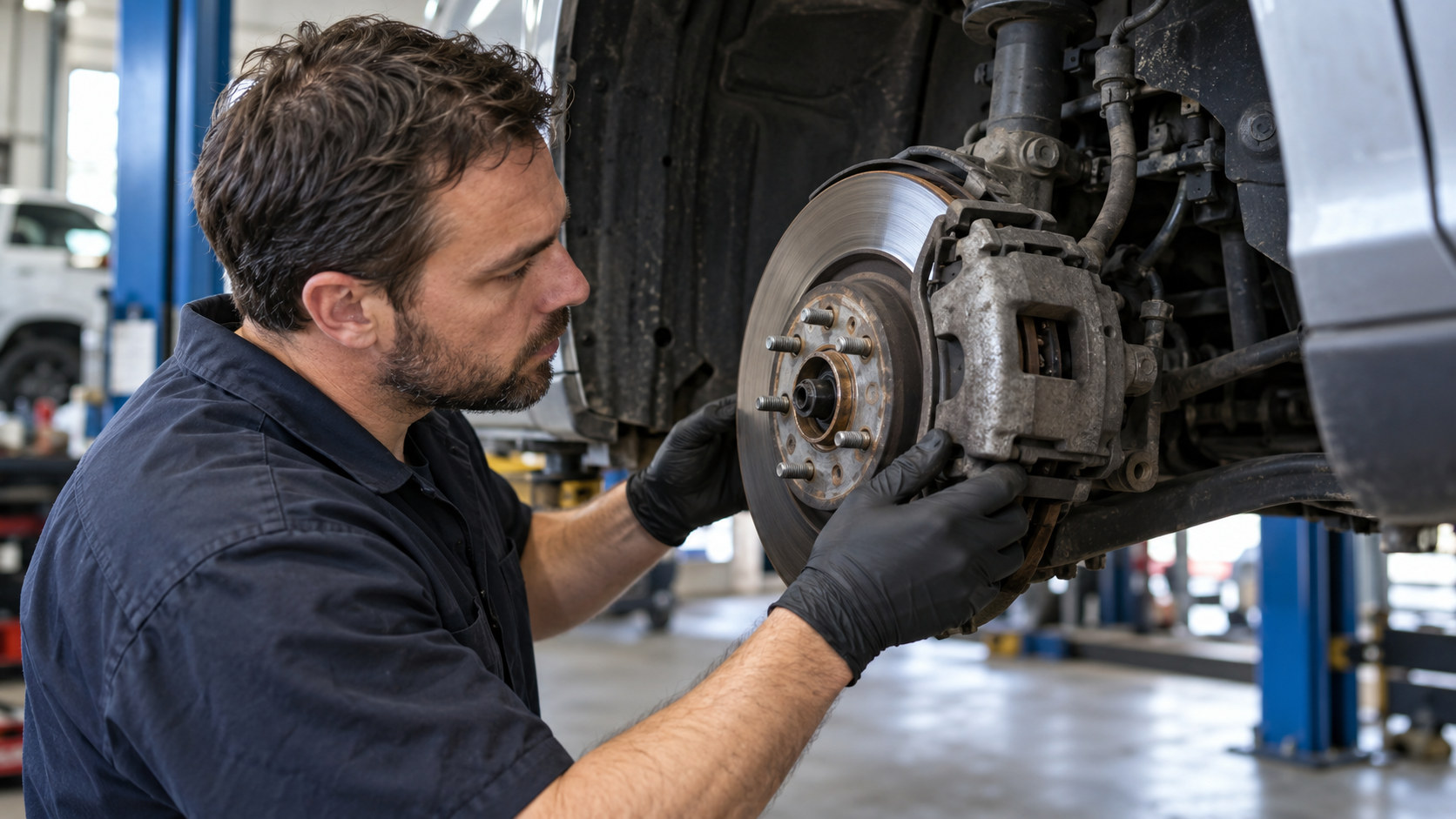
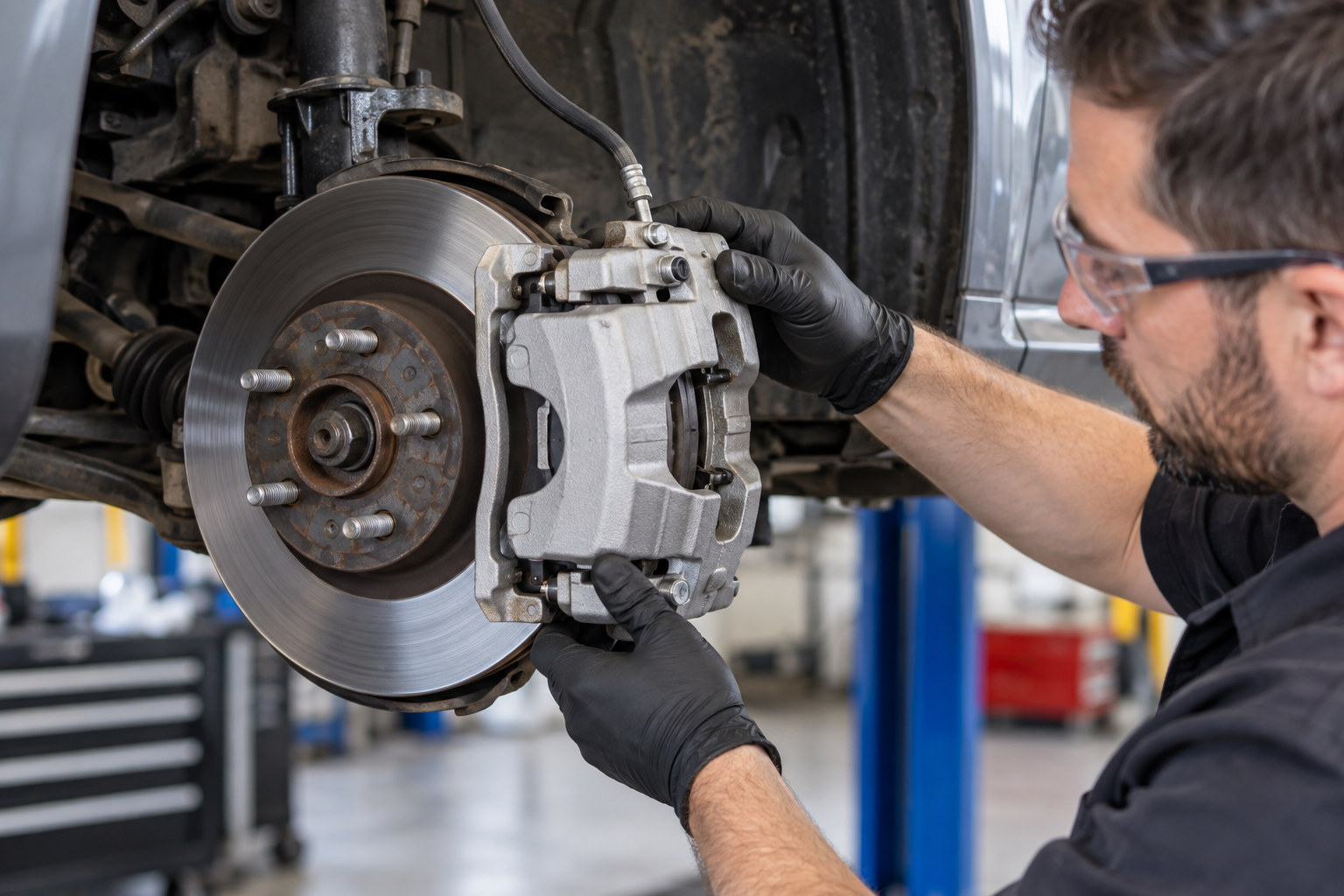
A sharp, hot smell after a short drive usually means one brake is dragging. The most likely cause is a sticking brake caliper. The caliper is the clamp that squeezes the pads against the disc. When it sticks it does not let go, so that brake stays partly applied as you drive.
How do you know if a brake caliper is sticking?
A sharp, hot smell after a short drive. It smells of hot metal, not burning oil, and comes from one corner. A brake that never fully releases rubs constantly, and rubbing makes heat. Stop-start running on the Nepean Highway brings it on sooner than a steady freeway run.
Fuel use creeping up for no clear reason. A dragging brake is one you drive against, so the engine works harder. Worth ruling out when nothing else has changed.
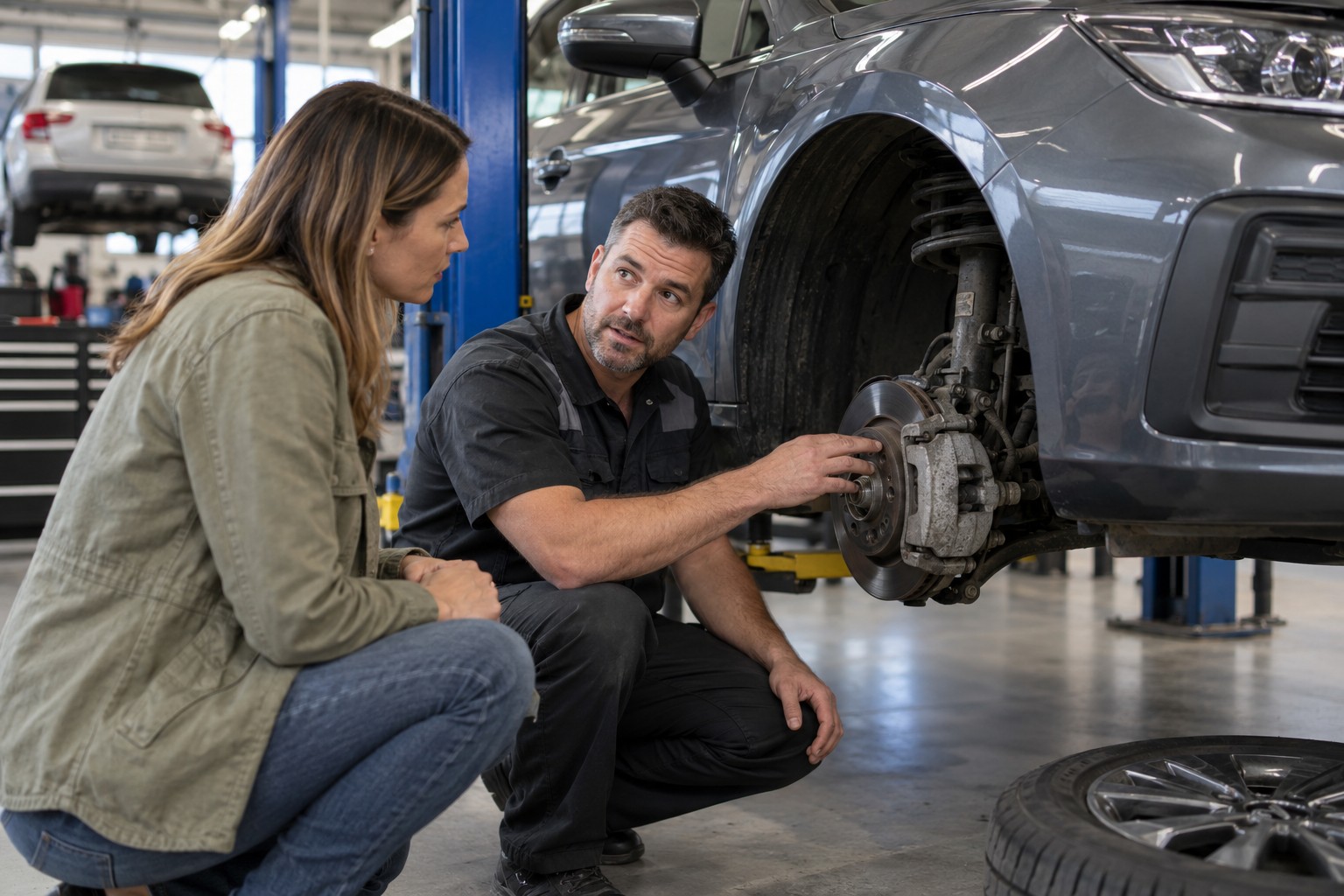
One wheel much hotter than the others. All four are warm after a drive. The tell is one far hotter than its partner on the same axle. Hold a hand near it rather than touching it.
The car pulling to one side when you brake. Pulling under brakes alone has several causes. Pulling under brakes plus a hot wheel or a hot smell points at the caliper.
Pads worn out on one side and fine on the other. Both sides of an axle do identical work, so they should wear alike. One side down to the backing plate means something is holding that pad on.
A brake pedal that feels perfectly normal. This is what catches people out. A sticking caliper will not let go, but it has not stopped working. Waiting for the pedal to warn you is how a disc gets destroyed.
A sticking caliper can also cause a vibration through the pedal or steering wheel. If that is your main symptom, it is worth reading why your car shudders when braking, because a shudder has causes of its own.
Why does a brake caliper stick?
A caliper presses the pads onto the disc, then lets them go. The common faults are rust or perished rubber in one of four places.
Seized slide pins. The caliper slides on two greased pins so it can centre over the disc, and rubber boots keep water off them. When a boot splits, grit gets in and the pins rust solid. It is the most common cause, and the cheapest to fix.
A corroded piston. The piston pushes the pad onto the disc. It sits in a fluid-filled bore behind a square seal that also draws it back when you lift off. Rust in the bore stops it moving, so the pad stays loaded.
A perished dust seal. A boot keeps water out of the bore. Once it splits, the bore corrodes. That is how a small rubber part turns into a caliper coming off the car.
A collapsed flexible brake hose. The hose can break down inside while looking sound outside. The lining lifts and forms a flap, so fluid gets through to apply the brake but cannot get back. It matters because it looks exactly like a seized caliper, and a new caliper does not fix it.
Two things speed this up. Cars kept near the water around Beaumaris and Black Rock get salt air over the brake hardware all year. Cars that sit unused for weeks are the other, because damp sits on the slide pins and the piston long enough for corrosion to take hold.
How does a mechanic confirm a sticking caliper?
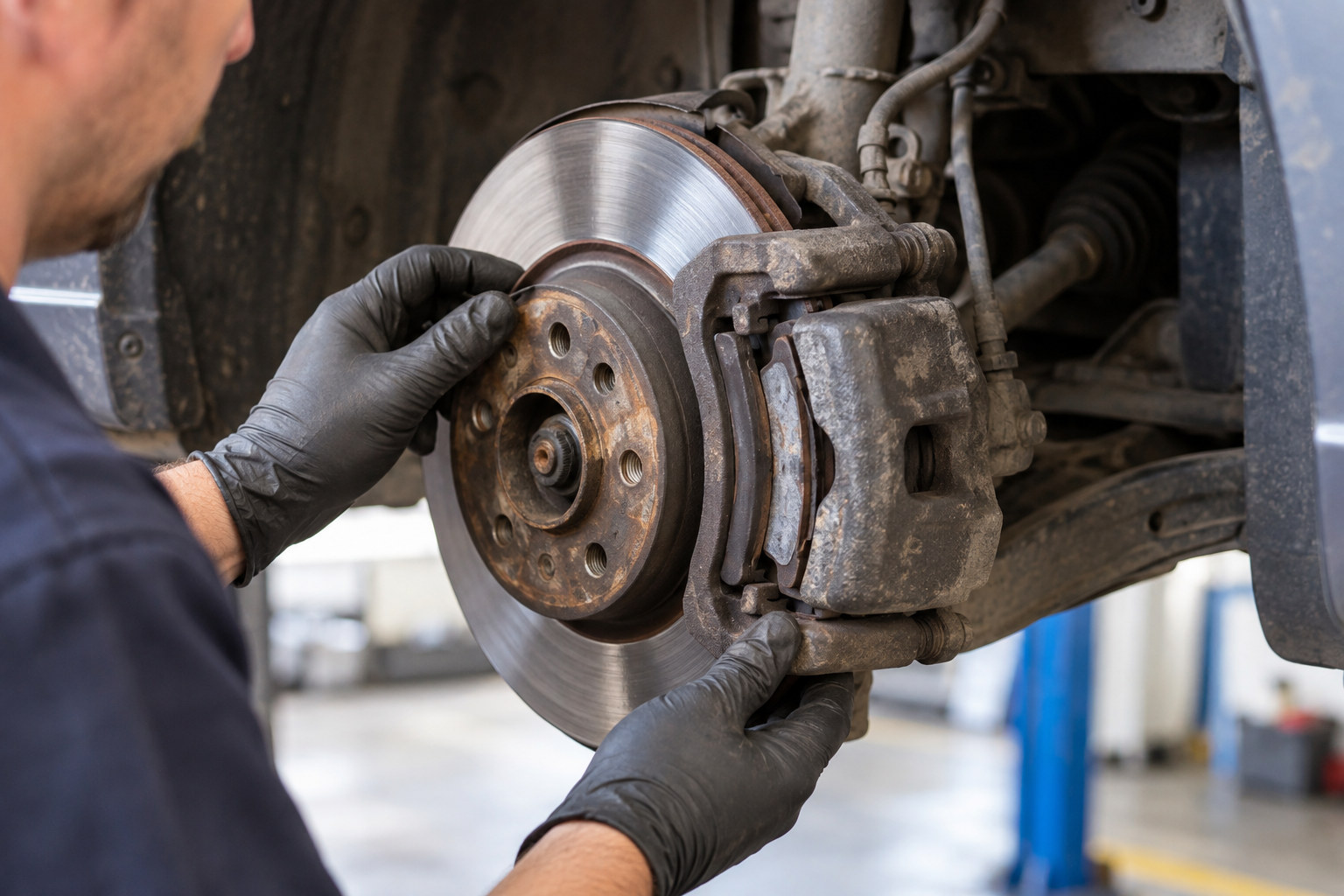
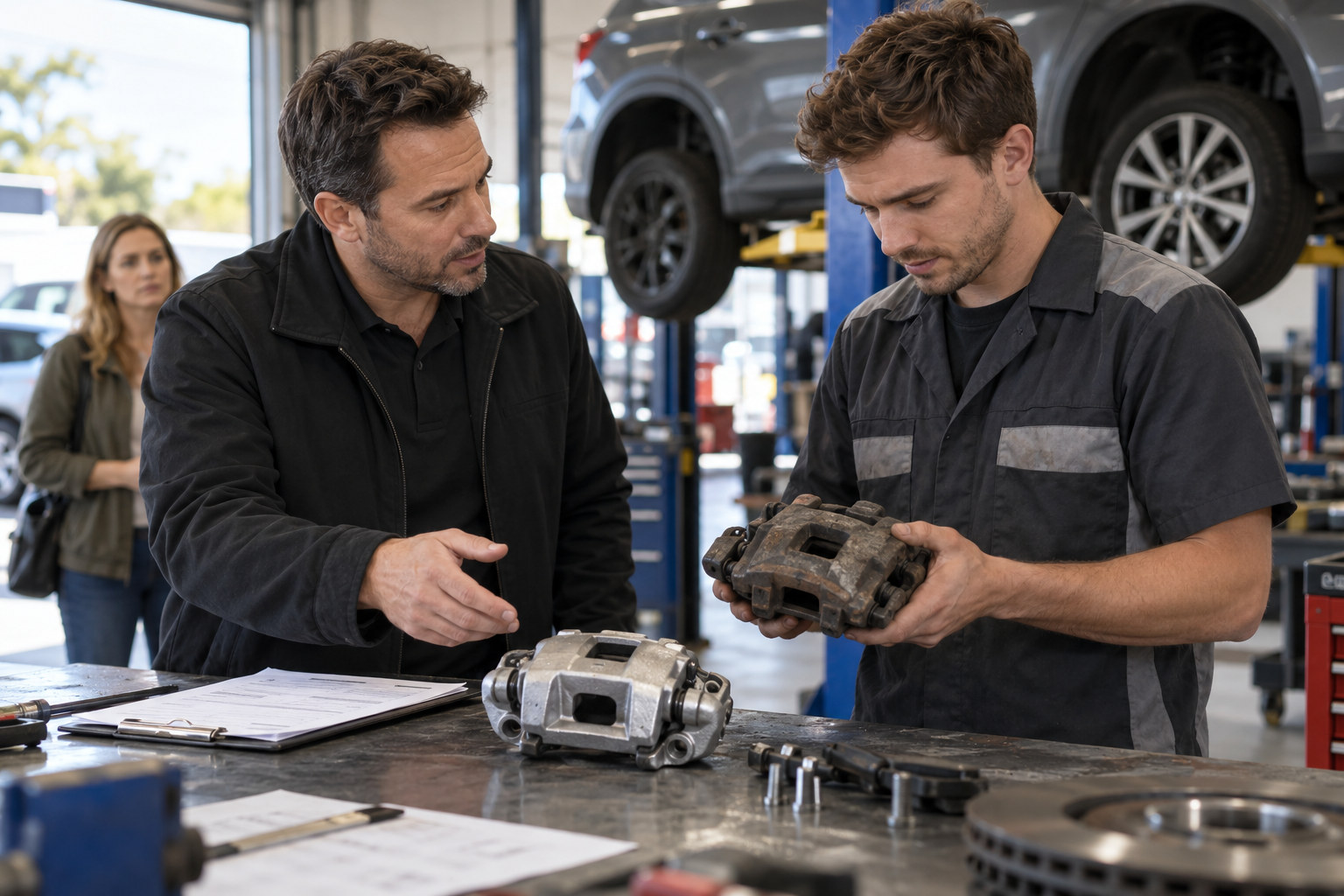
Measuring pad thickness on both sides. The pads come off and get measured, then compared left to right. A big difference across the car is the strongest sign.
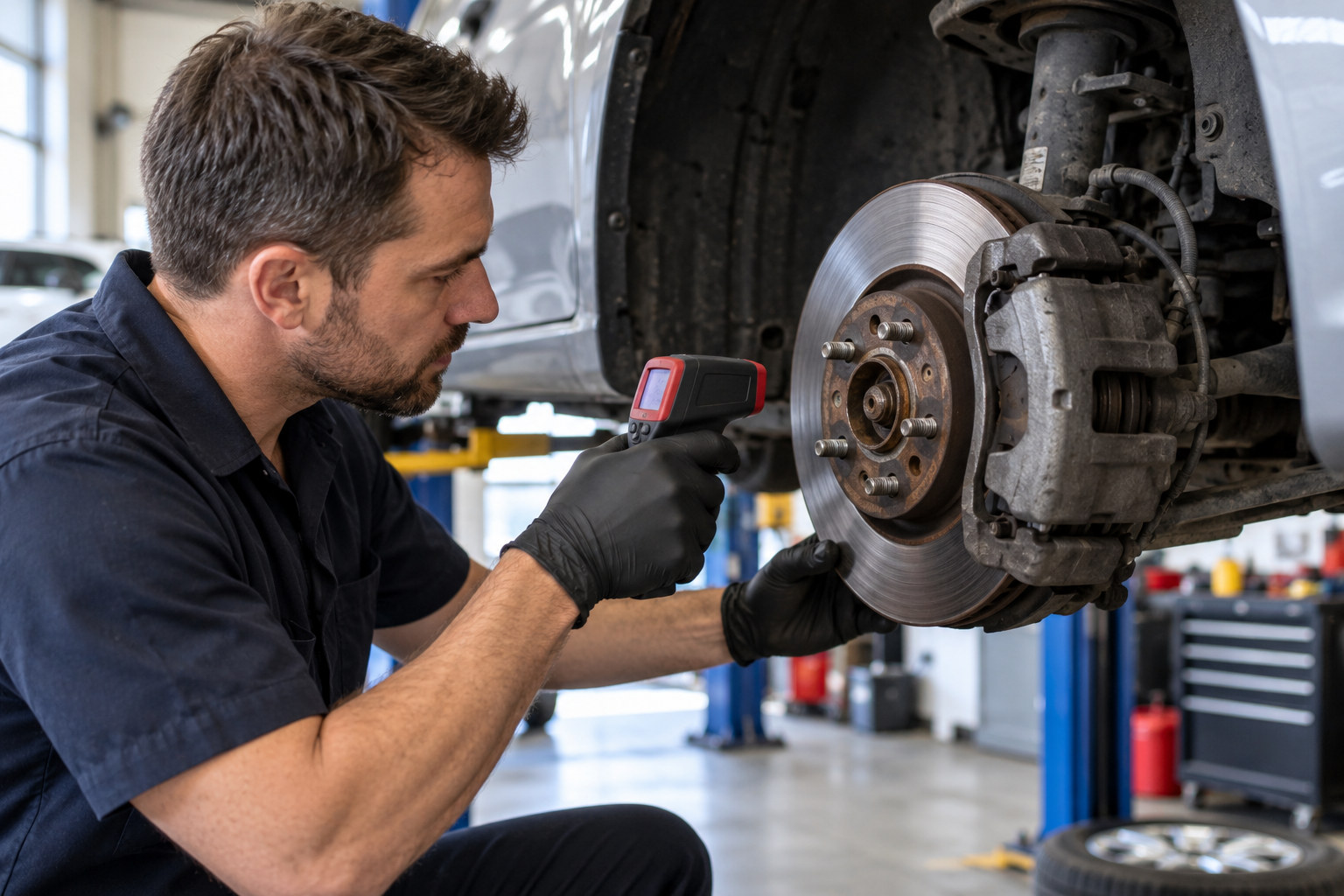
Checking wheel temperatures after a road test. Each wheel is read with an infrared thermometer, which is a measurement rather than a judgement.
Spinning the wheel off the ground. On the hoist it should turn with light resistance and keep going. One that stops dead is dragging.
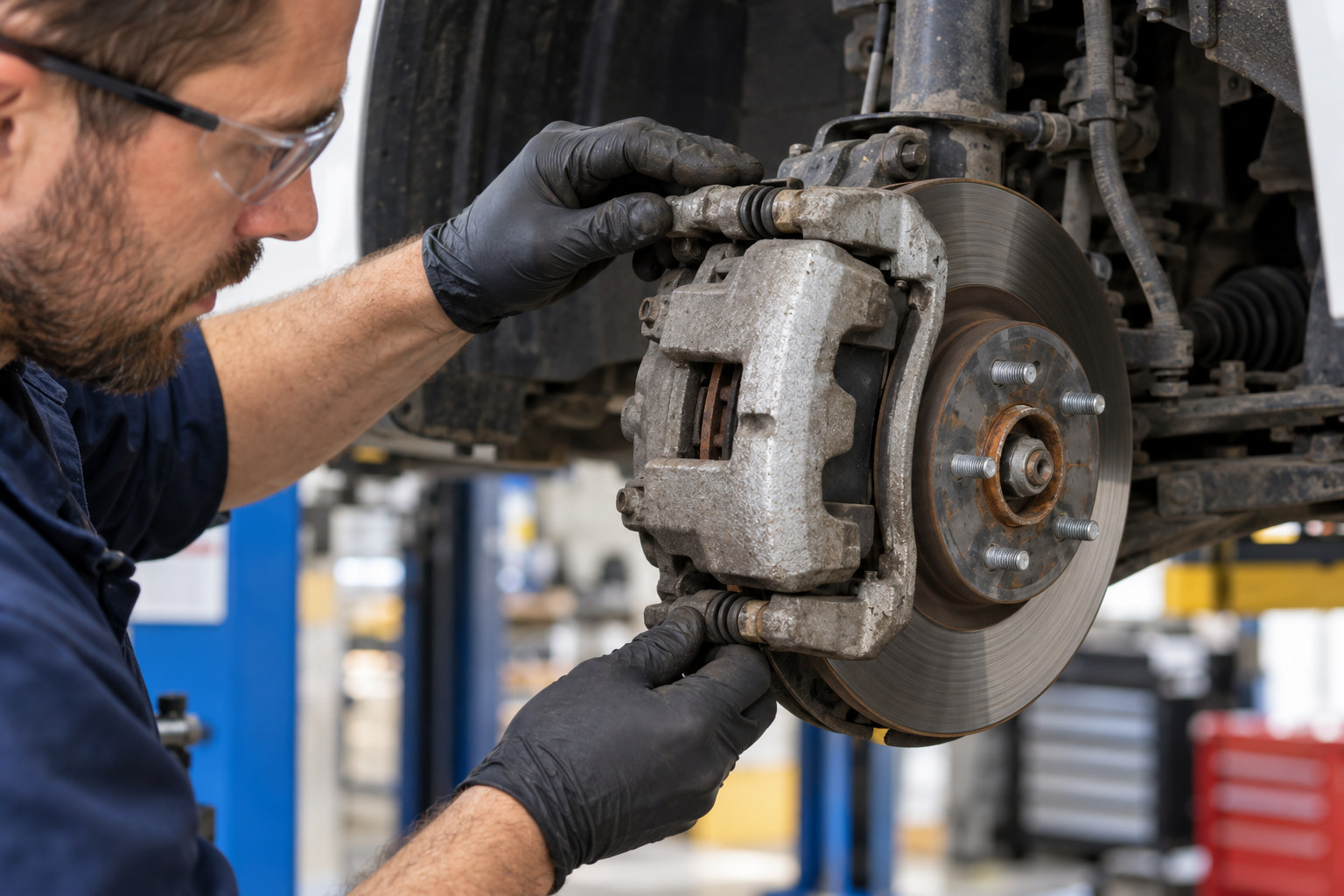
Checking that the slide pins move. The caliper comes off and the pins are pulled out. Clean pins slide under finger pressure.
Cracking the bleed nipple. This separates a caliper fault from a hose fault. With the wheel dragging, opening the nipple releases the trapped pressure. If the wheel then spins free, the fluid could not get back past a failed hose. If it stays locked, the piston is seized.
Can a sticking caliper be repaired or replaced?
Three outcomes are possible, and the state of the piston bore decides which.
Freed and reseated. Where the pins have seized but the hydraulic side is sound, they are cleaned up, the boots renewed and everything regreased. That is a proper repair, not a patch.
Rebuilt with a seal kit. The piston comes out, the bore is cleaned, and new seals and boots go in. This only works if the bore is clean, because pitting chews out a new seal.
Replaced. Where the bore is pitted or the casting damaged, a new unit goes on.
Calipers are normally replaced in pairs across an axle. A seal stiffens with age and heat, and a stiff seal draws the piston back more slowly. Put a new caliper against a tired one and the two brakes release at different rates. The driver feels that as a pull.
If the brake has dragged a while, the pads on that corner are usually cooked and go with it. The disc may be scored as well. Whether it can be machined or replaced is a separate measurement, and the article on whether you need new brake rotors or just new pads covers that call.
What does it cost to replace a brake caliper?
Caliper replacement is quoted per corner. National repair cost guides put it between $250 and $750 for one caliper fitted. Where a car lands depends on what the part costs for that model.
Doing both sides of an axle does not cost twice as much. The parts double, but the car is already up and the system needs bleeding either way.
A seal kit rebuild comes in under a new caliper, because you are buying seals rather than a casting. Freeing seized pins is cheaper again.
Is it safe to drive with a sticking brake caliper?
A slightly dragging brake is not a reason to stop and ring a tow truck. It is a reason to book it in rather than leave it to the next service.
What it damages, it damages fast. The pad wears away every kilometre and the heat goes into the disc. A fault that began as rusty pins becomes pads, a disc and a caliper.
The case to take seriously is a long descent with a brake already dragging, because the extra heat goes into the brake fluid, and hot fluid does not work as well.
If one wheel runs hot, or the car pulls when you brake, the next step is a measurement rather than a parts order. Ask for the pads to be measured on both sides, and the slide pins checked before new pads go on. New pads fitted to a sticking caliper cook the same way the old ones did. Caliper inspection and servicing is part of what Chandos Auto covers under brake repairs. If the smell has already turned up, it is worth booking before the disc goes too. You can book a time online.
Frequently asked questions
Can a sticking brake caliper fix itself?
No. Rust in the slide pins or the piston bore does not clear on its own, and neither does a failed hose. Driving on it makes the repair dearer, it does not free it.
Do brake calipers need to be replaced in pairs?
Usually, when the fix is replacement rather than repair. Matching one new unit against an ageing one on the same axle is the situation to avoid. Where the job is cleaning up seized pins, one corner on its own is fine.
Is a sticking brake caliper an expensive repair?
It sits at the lower end of brake work when caught early, because freeing and regreasing seized pins is mostly labour rather than parts. It gets dearer once the bore is pitted, since that means a replacement unit and often the pads and disc as well.
The quote came in higher than you think the car is worth, and now you have to decide. Comparing those two numbers is where the advice usually starts, and on its own it settles nothing. Here are the three numbers that do, written by the workshop that would be paid for the repair.
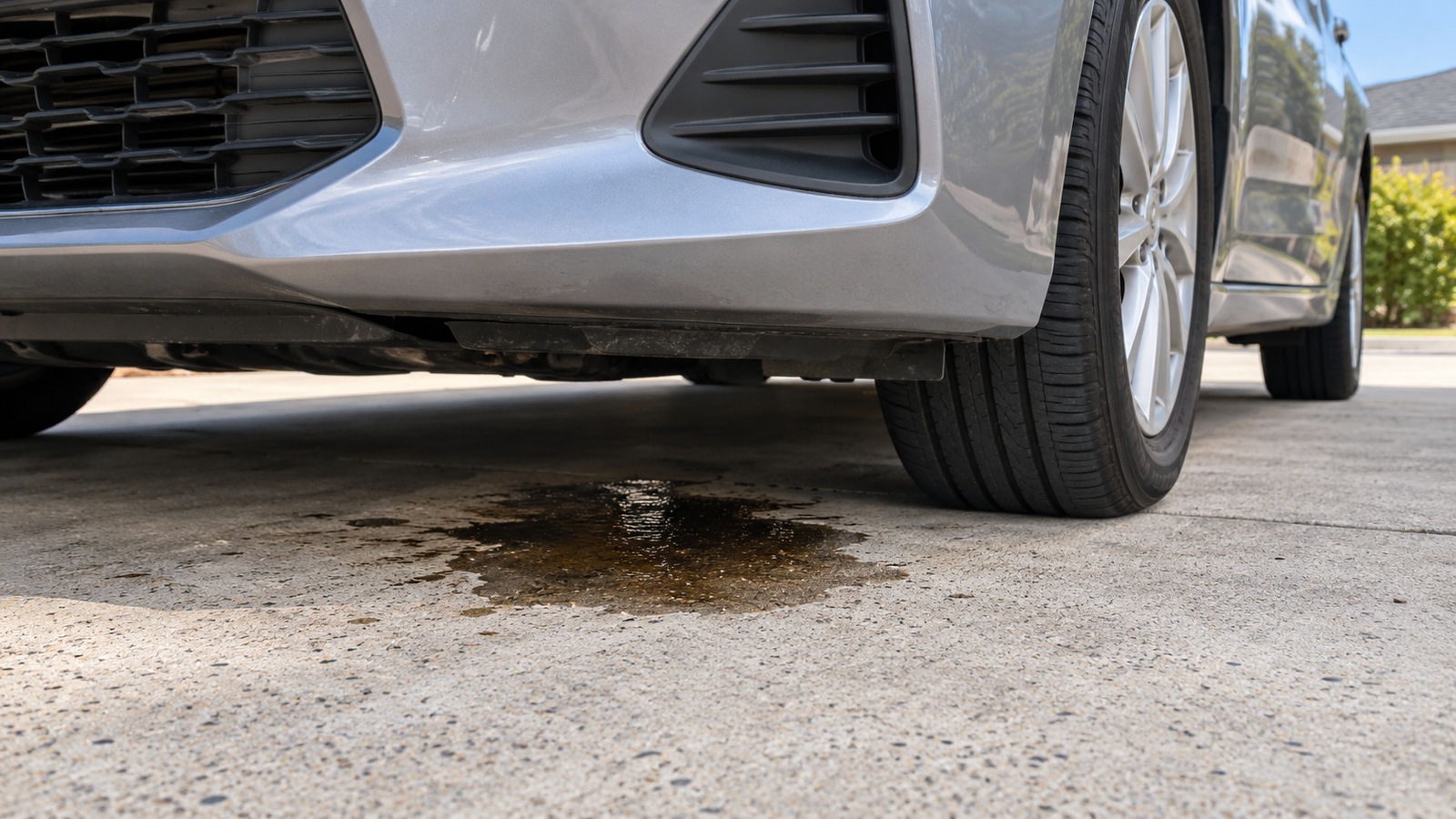
You reverse off the driveway and there is a stain on the concrete where the car was. Colour gets you most of the way to what it is, and where it sits under the car gets you the rest. Here is what each one usually means, which two are worth stopping for, and the cardboard trick that finds the source overnight.
You ring up to book a service and the first thing you are asked is which one you want. Nobody explains the question, so most people guess. The short answer is that a logbook service follows the list your manufacturer wrote, a standard service follows the workshop’s own, and which you need comes down mostly to whether the car is still under warranty.
Book for your auto service at the push of a button
Our technicians have worked on almost every vehicle available, which gives them vast experience and enables quick diagnosis of faults or problems saving our customers time and money.
Book a service or RWC certificate inspection today
Need a Roadworthy Certificate?
If you're selling a car, transferring registration, or simply want to make sure your vehicle is safe, you’ll need a valid Roadworthy Certificate (RWC).
At Chandos Auto Repairs, we’re fully licensed to carry out inspections and issue RWCs quickly and professionally.
Protect your sale, protect your safety — book your roadworthy inspection with Chandos today.
Whether it’s time for your next scheduled service or you need a roadworthy certificate, we’re ready to help.
Testimonials
             Posted on Google        Justin Peters     Trustindex verifies that the original source of the review is Google. Excellent service and very efficient work. Highly recommended. Thanks Sarah and team.         Posted on Google        Amy Fowlds     Trustindex verifies that the original source of the review is Google. As a woman who isn't particularly knowledgeable about cars (personally), I've unfortunately had some bad experiences in the past where I felt taken advantage of. That's why I am so incredibly grateful to have found Chandos Auto's! From the moment I walked in, Sarah and Paul were not only welcoming but also transparent with their pricing. They took the time to explain exactly what needed to be done to my car, why it was necessary, and what the costs would be upfront. Their kindness, honesty, and professionalism made me feel confident in their work, and I can’t express how much peace of mind it gives me to know I have a mechanic I can trust and now have as my regular mechanic. I wholeheartedly recommend Chandos Auto's to anyone looking for reliable, honest car service.

Thank you again, Sarah and Paul! My car is running beautifully. :)         Posted on Google        Jen H     Trustindex verifies that the original source of the review is Google. Very friendly, knowledgeable and professional. Explained the work that they performed on my car to me and answered any questions I had. No hidden costs along the way, as I was called and asked prior to anything unexpected being done so I could decide how to proceed. Thank you, I will be returning next service.         Posted on Google        Jack Goulmy     Trustindex verifies that the original source of the review is Google. Great servise and great team! Highly recommend.         Posted on Google        Sendo Liu     Trustindex verifies that the original source of the review is Google. Very helpful, very responsive, very quick         Posted on Google        Freddie Carlstrom     Trustindex verifies that the original source of the review is Google. Stephen from Chando’s took on my roadworthy when no one else would this close to Christmas. Awesome, friendly service with incredible turnaround times. So good to find such a great local mechanic - we’ll be back.         Posted on Google        Sam Giles     Trustindex verifies that the original source of the review is Google. Went and took my Ranger to Chandos for the first time today for a service and have a look at a few things, Steve the legend ran me through everything he did and what to keep an eye on, great to find a local mechanic, cars driving grouse will recommend to all family and friends         Posted on Google        M C     Trustindex verifies that the original source of the review is Google. Best guys ever, needed an inspection done because I was having trouble finding an issue, multiple people/places couldn't but this place had found my problem in 15 minutes. Everyone was kind and friendly, 11/10 service!         Posted on Google        Dustin Carpenter     Trustindex verifies that the original source of the review is Google. I can’t say enough good things about these folks!! I had one day to get 3 days worth of stuff done and they smashed it for me cheaper than I was quoted else where. And they did it while being extremely kind and polite.         Posted on Google        Renae     Trustindex verifies that the original source of the review is Google. Life had thrown massive curveballs and to top it off, I had my elderly fathers car transferred into my name. Original mechanic sick, booked in a panic to another who did not turn up. Last day to keep registration ( I had been waiting for original mechanic- my fault). I rang Chandos and these guys squeezed us in. They were already busy. They were kind, professional, upfront and honest. I will definitely go back to these guys. Very happy. A massive Thankyou