Are engine flushes and fuel cleans worth paying for?
An engine flush is a cleaning chemical poured into the old oil and run through the engine for a few minutes before the oil is drained out. A fuel system clean is a solvent pushed through the injectors and the intake to shift the deposits that build up there. Neither one is scheduled maintenance. A car that has been serviced on time, on the right oil, usually needs neither.
What is an engine flush?
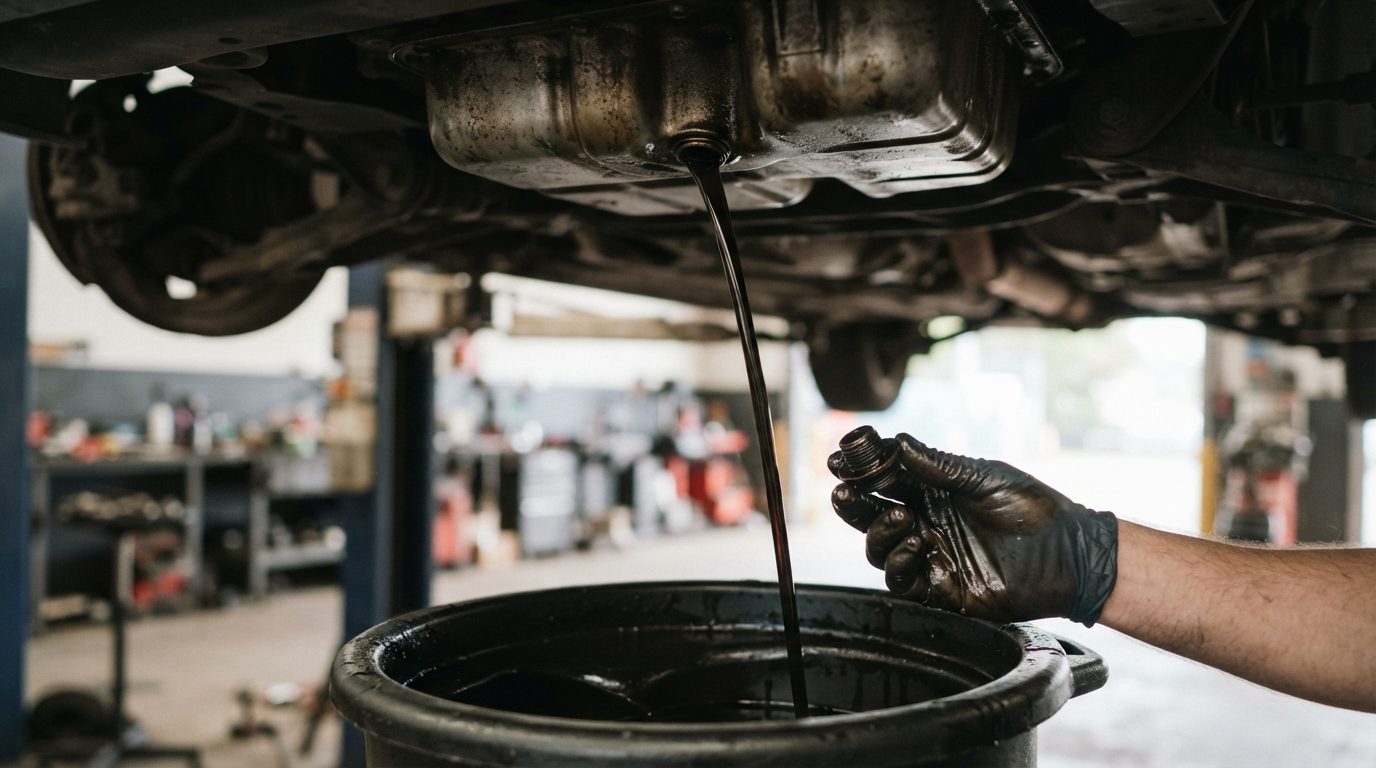
An engine flush is a chemical cleaner mixed into the oil that is about to come out, not into the fresh oil going in. The engine is idled for five to ten minutes so the cleaner circulates. The oil is then drained, and fresh oil and a new filter go in.
It is meant to loosen sludge: thickened, burnt oil that has settled inside the engine and stopped flowing properly. Sludge forms when oil is left in too long, or when the engine never gets hot enough to burn off the moisture and fuel in it.
The case for a separate flush is weaker than it once was. Modern oils carry two cleaning additives of their own. Detergents lift deposits off metal surfaces. Dispersants hold soot and grit in suspension so it leaves with the oil at the next change. Oil changed on schedule already does some of that job.
What is a fuel system clean?
A fuel system clean is a solvent run through the fuel and air side of the engine. It targets the carbon and gum that collect on the injectors, the intake, and the valves. There are two versions, and they are different jobs.
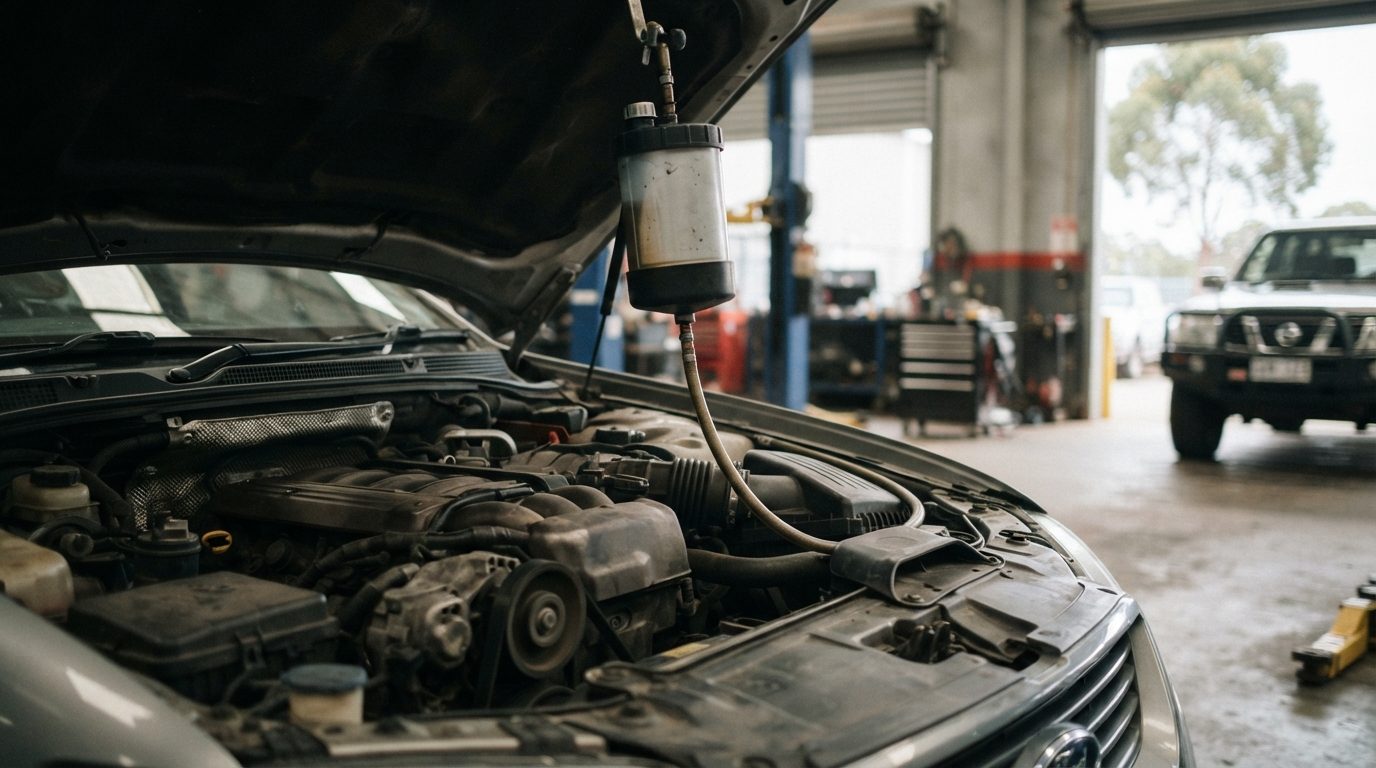
The on-car version is the common one. A canister of cleaner is connected to the intake or the fuel rail and the engine is run so the solvent passes through. It treats every injector at once and measures nothing, so nothing afterwards says what changed.
The off-car version means the injectors come out. They go into an ultrasonic bath, get new seals and filters, and are flow tested on a bench. That gives a flow figure for each one before and after, plus a look at each spray pattern. It costs more and takes the car off the road. It is also the only version that can say which injector was the problem.
Neither is the same as a tune-up, which is where a workshop looks past the oil at the fuel and ignition side.
Deposits can change the way an engine runs, and a car losing power under load is one thing owners notice, though it has other causes.
When is an engine flush worth it?
A flush earns its place when there is reason to think something is in there to remove. That reason has to come from somewhere other than the odometer.
Deposits are a driving-pattern problem before an age problem. Short runs around the bayside suburbs and the Nepean Highway crawl can leave a car rarely reaching full operating temperature. An engine that never gets properly hot builds sludge, whatever the kilometres say.
A long gap in the service history. Oil left well past its interval stops doing its job, and the deposits it should carry away settle instead.
A second-hand car with an unknown past. If nobody can say when the oil was last changed, or on what, the engine stays an unknown until somebody looks inside.
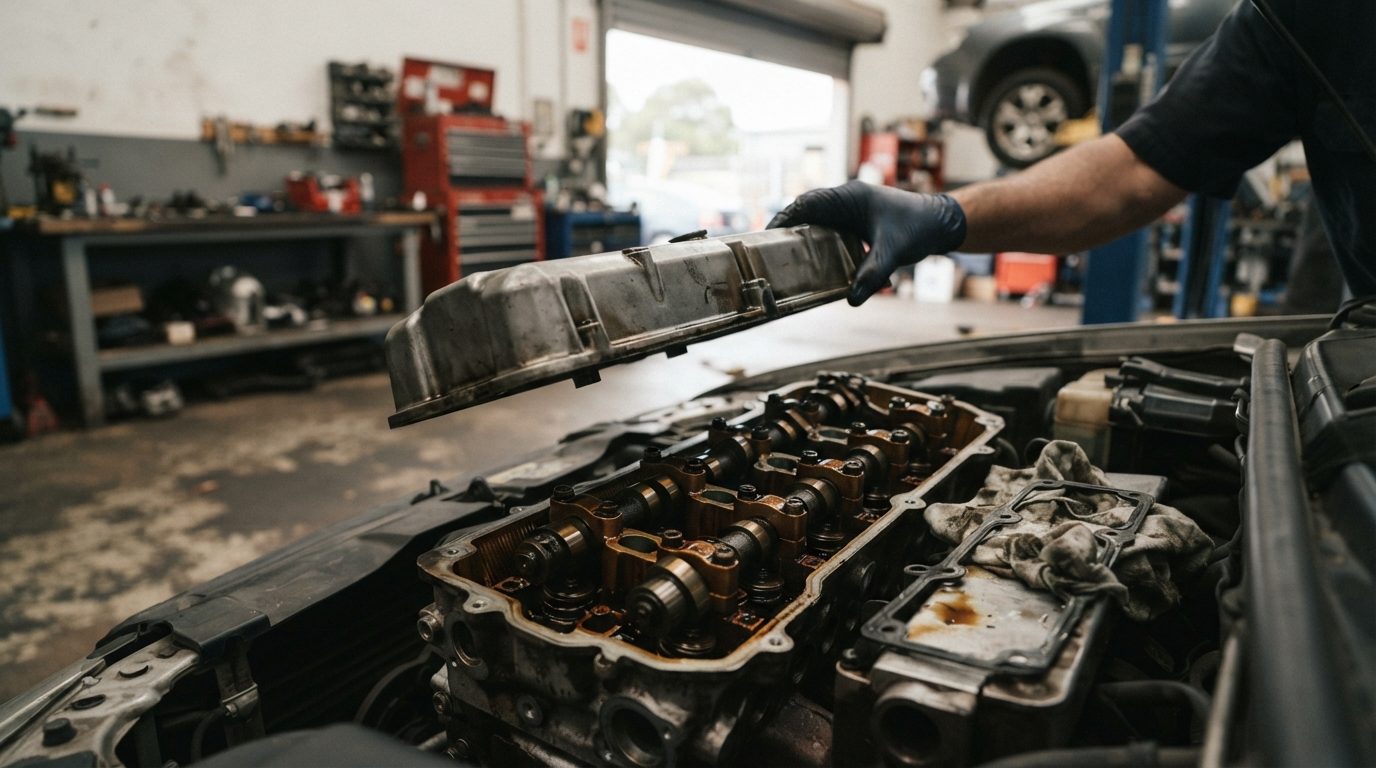
Sludge somebody has seen. This only counts if a person has looked, which means a cover off for other work, or a camera down the oil filler. Nobody sees sludge from the driver’s seat.
A change of oil grade after neglect. Moving a neglected engine onto a different oil is a good moment to clear out what the old oil left behind.
None of these sends you looking for a flush. They are the situations where one has something to work on.
Can an engine flush do more harm than good?
On a high-kilometre engine that has never been flushed, it can. This is the part that rarely comes up at the counter.
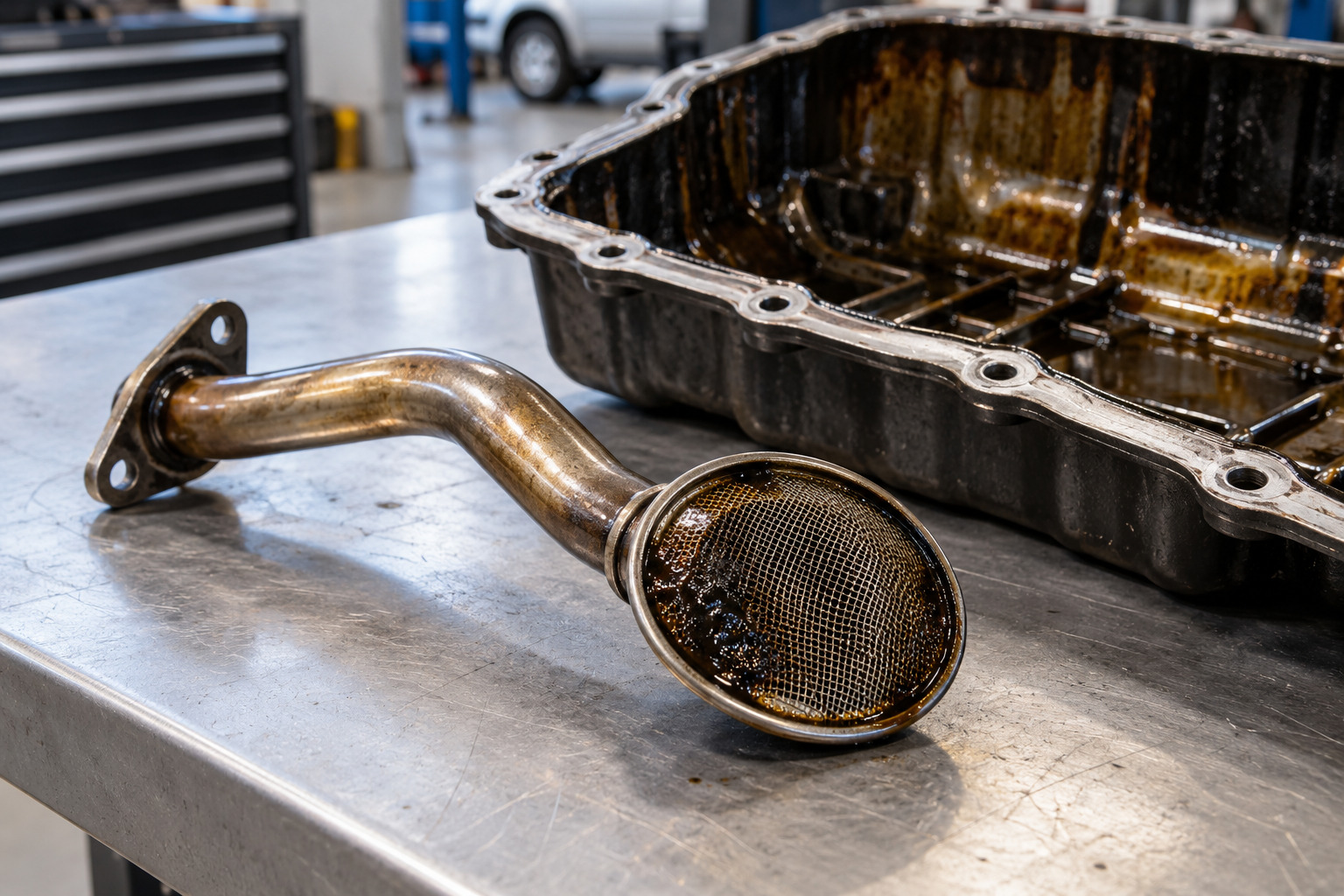
Deposits sit where they have settled. A cleaner loosens them, and they have to go somewhere. Most leave with the old oil. Some reach the oil pickup, the mesh screen the oil pump draws through, and block it. Others have been sitting against a tired seal, filling a gap that was already there. Take the deposit away and the gap shows up as a leak.
Neither outcome is common, and neither means a flush wrecks engines. The risk is small. It is also highest on the exact car a flush tends to be offered for: high kilometres, thin paperwork, nobody sure what is inside. Some carmakers tell owners in the handbook not to add anything to the oil, so yours is worth a look.
Do fuel additives from the servo work?
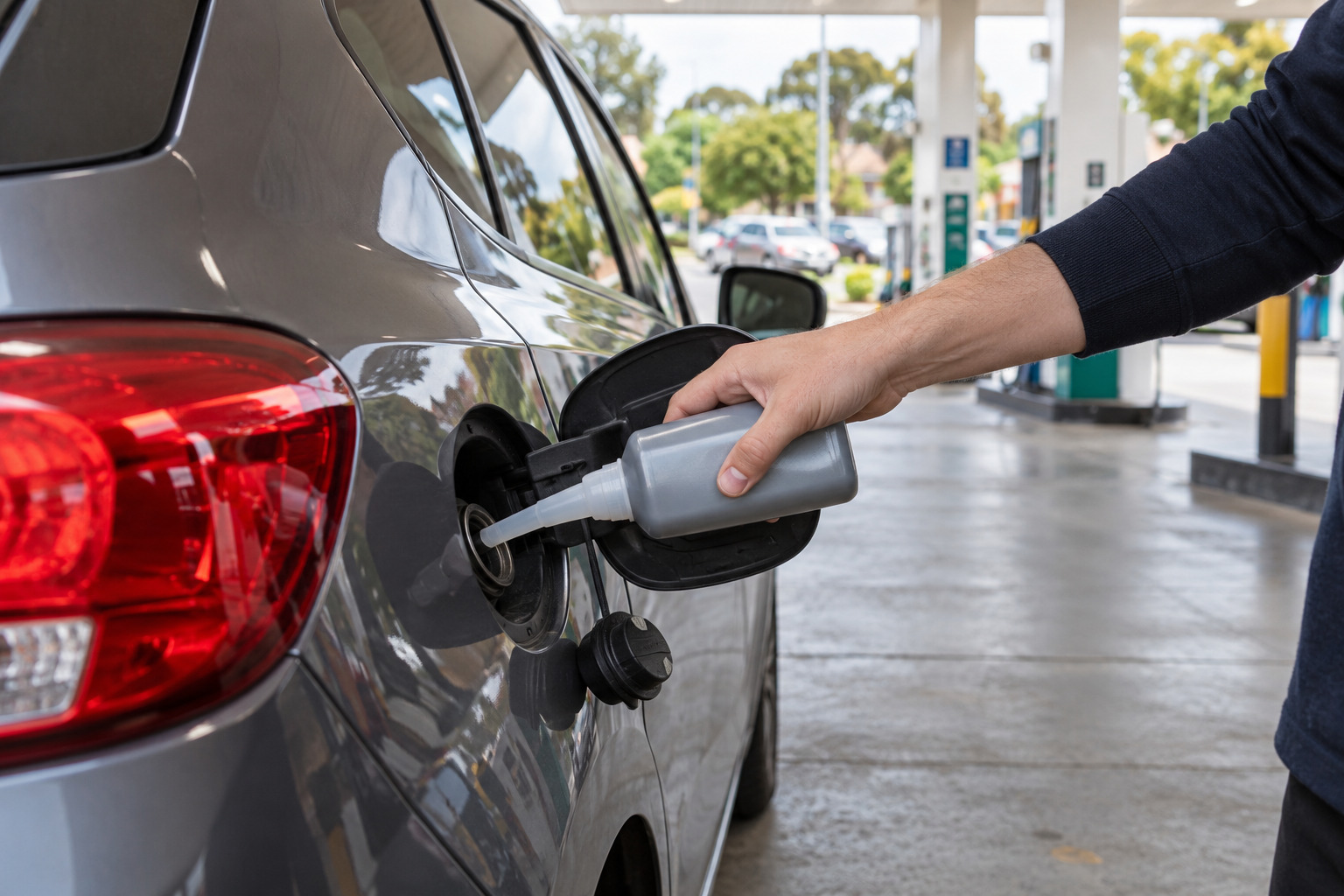
The question at the counter is whether the bottle from the servo does the same job as the clean you have been quoted for. It does not. The two are aimed at different things.
An additive in the tank is a maintenance measure. Used now and again in a healthy fuel system, it helps keep injectors from gumming up. It is cheap, and there is no real argument against using one. What it will not do is fix a fault that has already turned up. A workshop clean is aimed at a problem somebody has found. An additive is aimed at stopping one appearing.
One limit is worth knowing. Fuel sprayed into the intake washes over the back of the valves on its way in. Fuel sprayed straight into the cylinder never touches them. A cleaner in the fuel cannot clean a part the fuel never reaches.
What to ask before you agree to either
Three questions cover it, and none sounds rude out loud.
The third you can check yourself. Service schedules are printed in the logbook or the handbook. Neither a flush nor a fuel system clean normally appears on one. Exactly what a standard service covers is a separate question.
What symptom or fault is this meant to fix?
What should change if it works, and how would we know?
Does the manufacturer’s schedule call for it on this car?
The first question does most of the work. A good answer names something specific: a reading, a fault code, something seen with a cover off. General benefit is not an answer.
If nobody can say what the clean is meant to fix, that is the answer.
If the car is doing something you are not happy with, the useful spend is finding out why. Have the fuel system looked at and diagnosed first, then decide about cleaning once somebody can name the fault. Chandos Auto can do that, and you can book a time online.
Frequently asked questions
Is an engine flush part of a normal car service?
No. It is an extra step with its own chemical and its own charge, offered on the day rather than set down in advance. If it is offered, ask what about the car prompted it.
Should an older car with a patchy service history be flushed?
Sometimes, and it turns on what has been seen rather than on the kilometres. A high reading and thin paperwork put a car in the group where a flush is sometimes justified, and in the group carrying the most risk. Look inside the engine before deciding.
How would I know afterwards whether the work made any difference?
Agree on the thing that should change before the work starts, then check it afterwards. Bench testing the injectors produces numbers you can compare. A treatment with nothing measured leaves you judging by how the car feels, which is a poor guide.
The quote came in higher than you think the car is worth, and now you have to decide. Comparing those two numbers is where the advice usually starts, and on its own it settles nothing. Here are the three numbers that do, written by the workshop that would be paid for the repair.
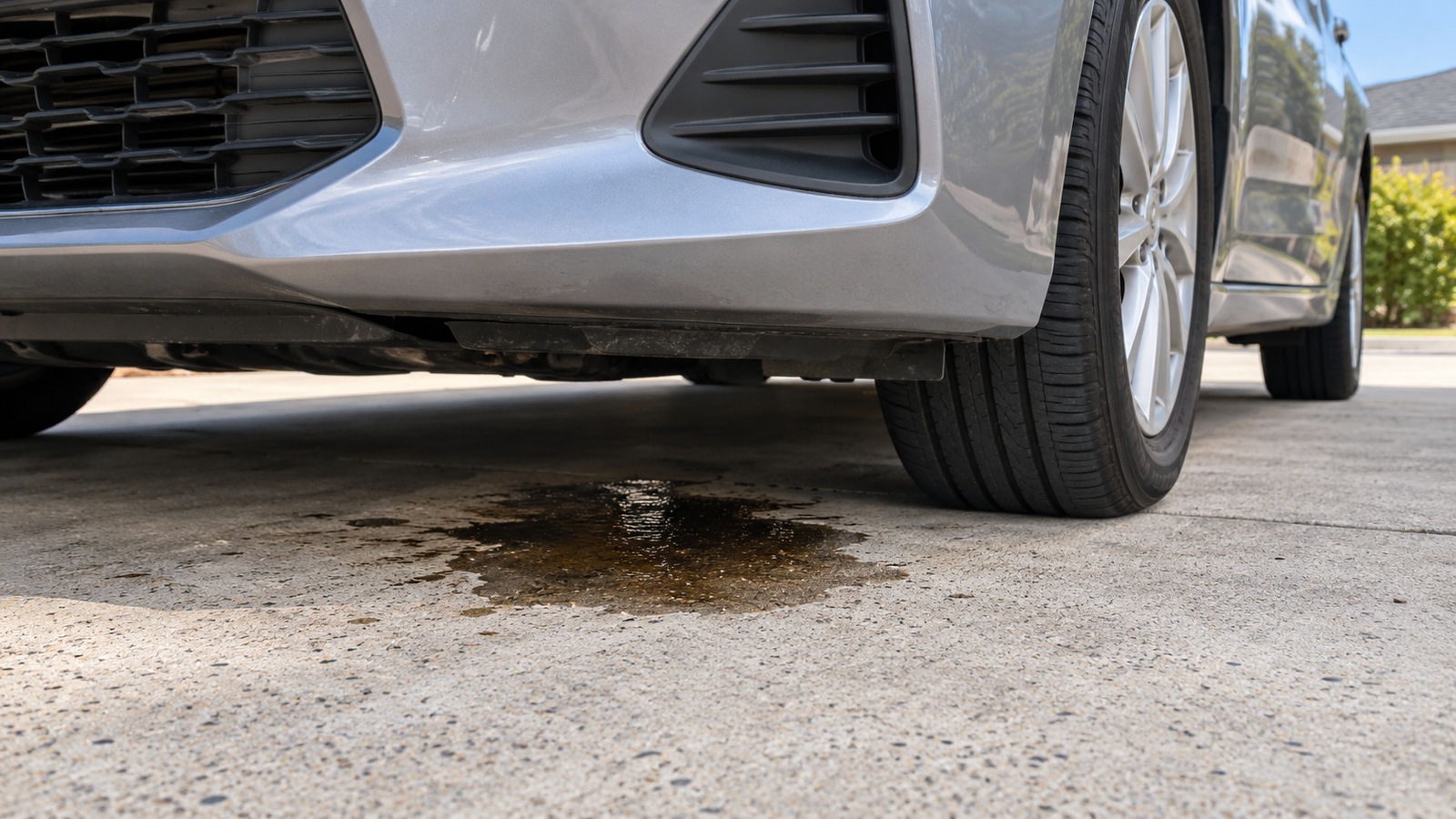
You reverse off the driveway and there is a stain on the concrete where the car was. Colour gets you most of the way to what it is, and where it sits under the car gets you the rest. Here is what each one usually means, which two are worth stopping for, and the cardboard trick that finds the source overnight.
You ring up to book a service and the first thing you are asked is which one you want. Nobody explains the question, so most people guess. The short answer is that a logbook service follows the list your manufacturer wrote, a standard service follows the workshop’s own, and which you need comes down mostly to whether the car is still under warranty.
Book for your auto service at the push of a button
Our technicians have worked on almost every vehicle available, which gives them vast experience and enables quick diagnosis of faults or problems saving our customers time and money.
Book a service or RWC certificate inspection today
Need a Roadworthy Certificate?
If you're selling a car, transferring registration, or simply want to make sure your vehicle is safe, you’ll need a valid Roadworthy Certificate (RWC).
At Chandos Auto Repairs, we’re fully licensed to carry out inspections and issue RWCs quickly and professionally.
Protect your sale, protect your safety — book your roadworthy inspection with Chandos today.
Whether it’s time for your next scheduled service or you need a roadworthy certificate, we’re ready to help.
Testimonials
             Posted on Google        Justin Peters     Trustindex verifies that the original source of the review is Google. Excellent service and very efficient work. Highly recommended. Thanks Sarah and team.         Posted on Google        Amy Fowlds     Trustindex verifies that the original source of the review is Google. As a woman who isn't particularly knowledgeable about cars (personally), I've unfortunately had some bad experiences in the past where I felt taken advantage of. That's why I am so incredibly grateful to have found Chandos Auto's! From the moment I walked in, Sarah and Paul were not only welcoming but also transparent with their pricing. They took the time to explain exactly what needed to be done to my car, why it was necessary, and what the costs would be upfront. Their kindness, honesty, and professionalism made me feel confident in their work, and I can’t express how much peace of mind it gives me to know I have a mechanic I can trust and now have as my regular mechanic. I wholeheartedly recommend Chandos Auto's to anyone looking for reliable, honest car service.

Thank you again, Sarah and Paul! My car is running beautifully. :)         Posted on Google        Jen H     Trustindex verifies that the original source of the review is Google. Very friendly, knowledgeable and professional. Explained the work that they performed on my car to me and answered any questions I had. No hidden costs along the way, as I was called and asked prior to anything unexpected being done so I could decide how to proceed. Thank you, I will be returning next service.         Posted on Google        Jack Goulmy     Trustindex verifies that the original source of the review is Google. Great servise and great team! Highly recommend.         Posted on Google        Sendo Liu     Trustindex verifies that the original source of the review is Google. Very helpful, very responsive, very quick         Posted on Google        Freddie Carlstrom     Trustindex verifies that the original source of the review is Google. Stephen from Chando’s took on my roadworthy when no one else would this close to Christmas. Awesome, friendly service with incredible turnaround times. So good to find such a great local mechanic - we’ll be back.         Posted on Google        Sam Giles     Trustindex verifies that the original source of the review is Google. Went and took my Ranger to Chandos for the first time today for a service and have a look at a few things, Steve the legend ran me through everything he did and what to keep an eye on, great to find a local mechanic, cars driving grouse will recommend to all family and friends         Posted on Google        M C     Trustindex verifies that the original source of the review is Google. Best guys ever, needed an inspection done because I was having trouble finding an issue, multiple people/places couldn't but this place had found my problem in 15 minutes. Everyone was kind and friendly, 11/10 service!         Posted on Google        Dustin Carpenter     Trustindex verifies that the original source of the review is Google. I can’t say enough good things about these folks!! I had one day to get 3 days worth of stuff done and they smashed it for me cheaper than I was quoted else where. And they did it while being extremely kind and polite.         Posted on Google        Renae     Trustindex verifies that the original source of the review is Google. Life had thrown massive curveballs and to top it off, I had my elderly fathers car transferred into my name. Original mechanic sick, booked in a panic to another who did not turn up. Last day to keep registration ( I had been waiting for original mechanic- my fault). I rang Chandos and these guys squeezed us in. They were already busy. They were kind, professional, upfront and honest. I will definitely go back to these guys. Very happy. A massive Thankyou