Picture two drivers with the same car, same age, same kilometres. One knows the car has a timing belt. He books it in for a belt change on schedule and pays a few hundred dollars, maybe up to a grand or so. The other has no idea the car has a belt at all. It snaps one morning on the way to work in Cheltenham. The engine is scrap. The difference between a routine bill and a ruined engine came down to one thing: knowing what was under the bonnet.
Your car has one of two parts doing this job. A timing belt is a toothed rubber belt that keeps the top and bottom of the engine turning in time with each other. It wears out and has to be replaced on a set schedule. A timing chain does the same job, but it's made of metal, sits inside the engine, and usually lasts the life of the car. If you have a belt, you have a maintenance job coming. If you have a chain, most likely you don't. Knowing which one you've got is the whole point.
| Timing belt | Timing chain | |
|---|---|---|
| Made of | Reinforced rubber | Metal, like a bicycle chain |
| Where it sits | Outside the engine, behind a cover | Inside the engine, running in oil |
| How long it lasts | A set interval, then it must be replaced | Usually the life of the car |
| Needs scheduled replacement? | Yes | No, in most cases |
| If it fails | Can wreck the engine on some cars | Rare, but a big repair if it does |
How do I know if my car has a timing belt or a chain?
There are four easy ways to find out.
- Check the logbook. If the belt has been replaced before, it will be written up as a timing belt or cam belt change. Cam belt is just another name for the same part.
- Check the car's handbook. The service schedule lists a belt replacement if the car has one, usually at a set kilometre or age mark.
- Look up the make, model, year and engine. This matters more than people think. The same model can come with a belt in one year and a chain in another. The exact engine is what counts.
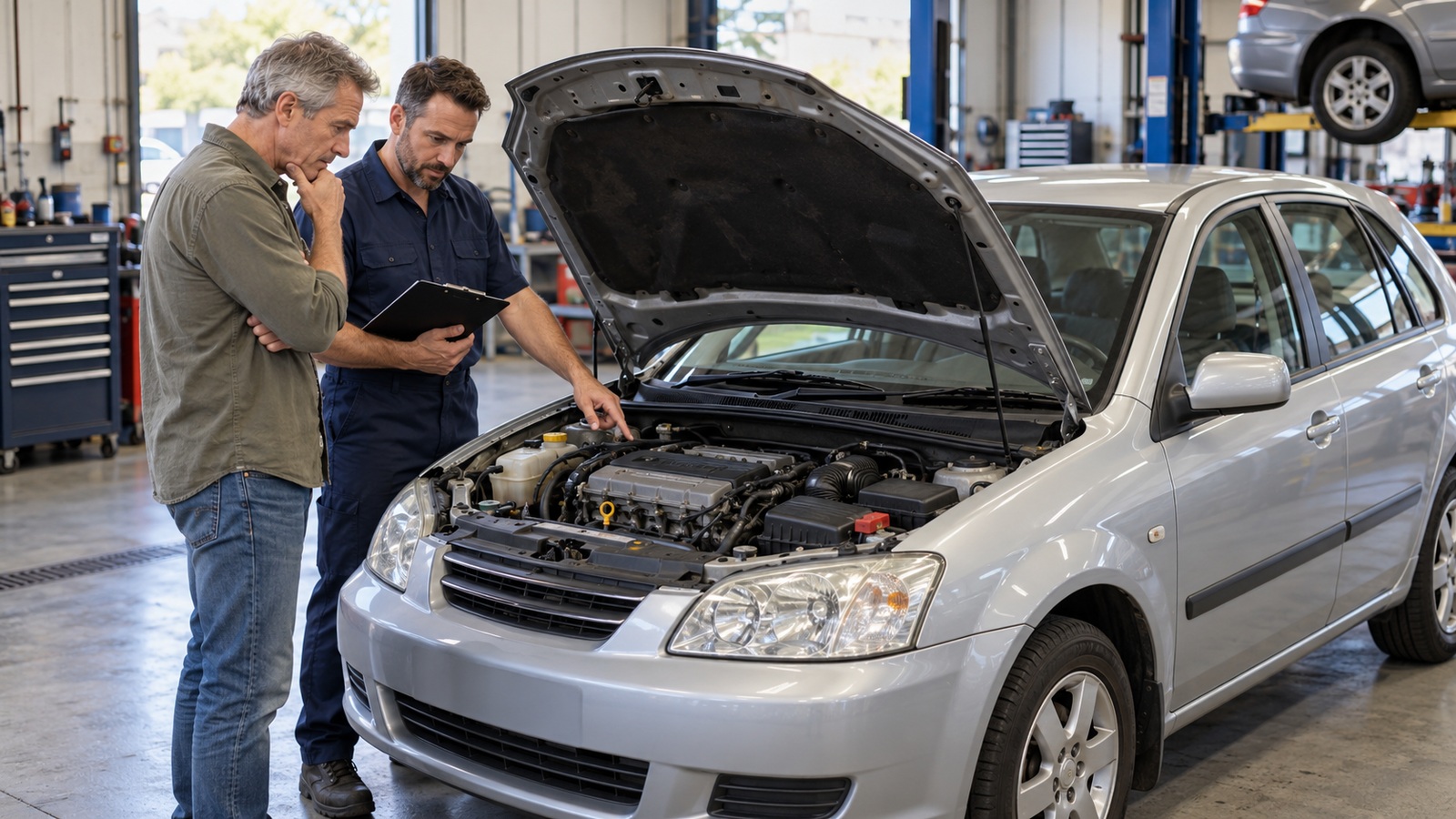
- Ask a mechanic. A quick look at the front of the engine tells a mechanic which one you have in minutes.
- Newer cars have moved towards chains, but newer does not mean safe. Plenty of cars on Bayside roads still run belts, and second-hand buyers often have no idea theirs is due.
Why a snapped timing belt can wreck your engine
This is where the money is, so it's worth understanding.
Many engines are what's called an interference engine. That means the valves and the pistons pass through the same space, just at different moments, kept apart only by perfect timing. The belt is what holds that timing.
If the belt snaps, the top of the engine stops but the bottom keeps spinning for a moment. The valves and pistons meet. They bend, break, and gouge each other. On an interference engine, a snapped belt often means bent valves, damaged pistons, and a repair bill in the thousands. Sometimes it's cheaper to fit a whole new engine.
On a non-interference engine, the valves and pistons never share space. If the belt breaks, the engine just stops. You get towed home and fit a new belt. No lasting damage.
The catch is that many modern engines are the interference type. Unless you know for sure yours isn't, treat a snapped belt as the expensive kind.
A timing belt is one of the cheapest parts to replace on time, and one of the most expensive to ignore.
When does a timing belt need replacing?
There is no single number that fits every car. Intervals are set by the maker, and they vary a lot between brands and even between models from the same brand.
As a rough guide, most belts fall somewhere between 60,000 and 160,000 kilometres, with a lot of cars sitting around the 100,000 mark.
But kilometres are only half the story. A timing belt is rubber, and rubber perishes with age whether you drive the car or not. Melbourne summers are hard on it. That's why belts also carry a time limit, often five to ten years, even on a low-kilometre car. Some makers set the interval by time alone. Honda, for one, calls for replacement every seven years no matter the distance.
Your logbook or handbook has the exact figure for your car. If you bought it second-hand and can't find proof the belt was done, the safe move is to treat it as due.
What does a timing belt replacement cost?
For most cars, a timing belt replacement in Australia runs somewhere between about $550 and $1,400, parts and labour included. European and complex engines sit higher.
Most of that is labour, not the belt. The belt sits deep in the engine behind covers, and a mechanic has to remove other parts to reach it. On some cars that's a few hours' work. On others it eats most of a day.
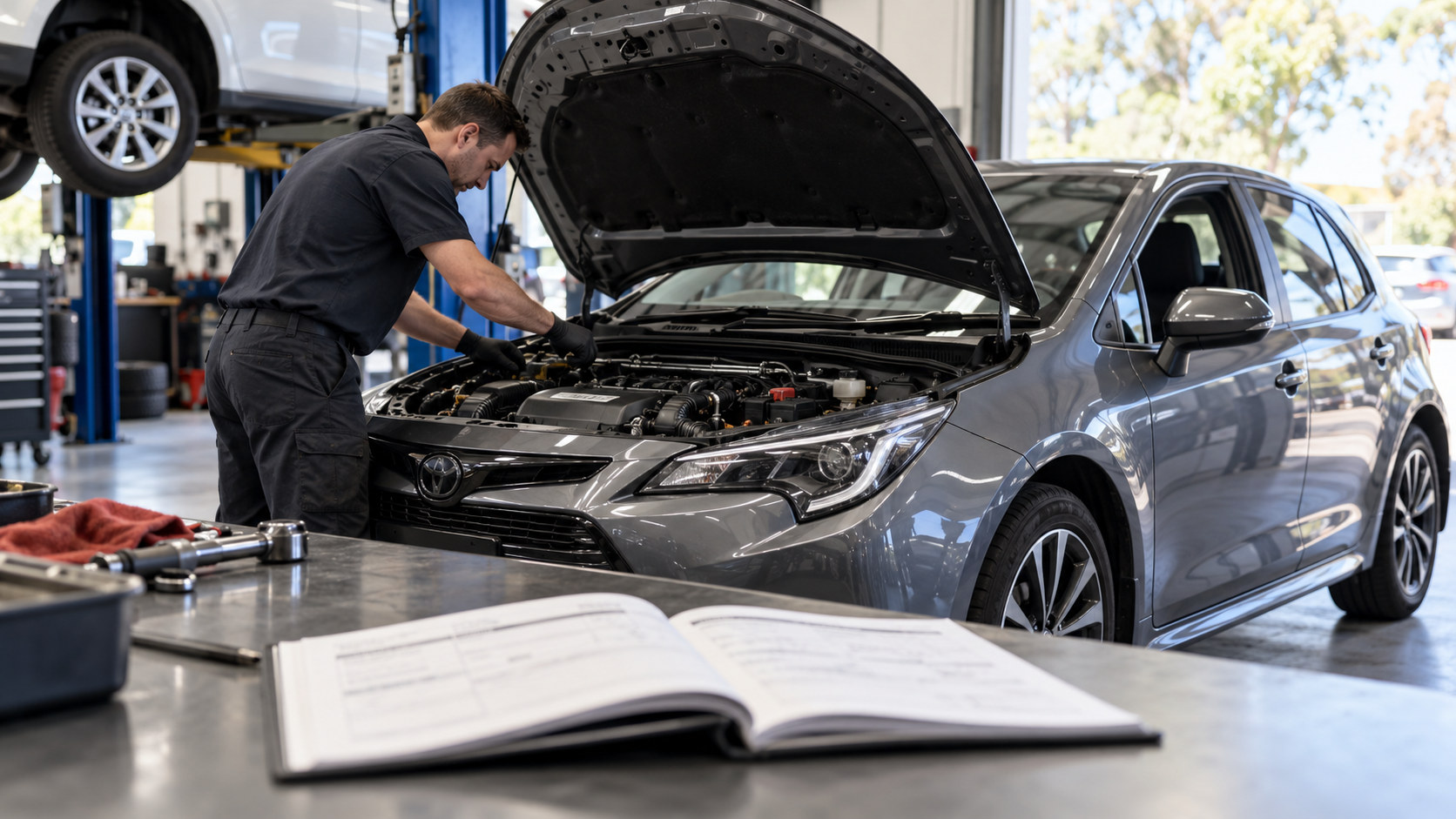
Because the engine is already stripped back, mechanics usually replace a few related parts while they're in there. The main one is the water pump, which pushes coolant around the engine and is often driven by the same belt. They'll also replace the tensioner, a pulley that keeps the belt at the right tightness, and the idler pulleys the belt runs on. Doing them together saves paying for the same labour twice down the track.
Compare that to a snapped belt on an interference engine, which can run into thousands or cost you the engine. Replacing the belt on time is the cheap option by a wide margin.
Are there warning signs before a belt fails?
Usually not, and that's the honest answer.
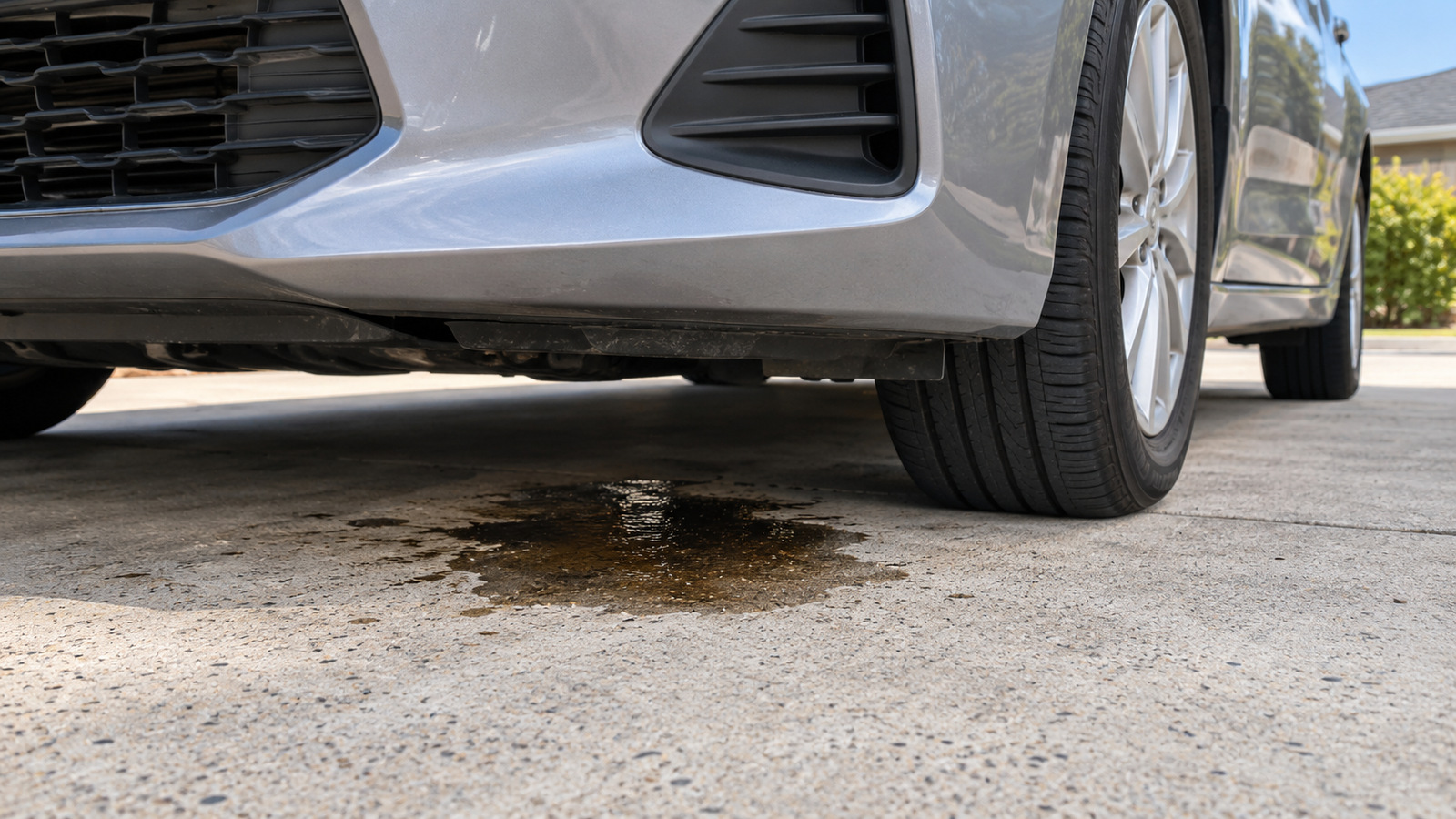
Some cars give a hint: a ticking or slapping noise from the front of the engine, or an oil leak near the timing cover that softens the rubber. But many belts give no warning at all. They hold perfectly right up until they don't.
That's exactly why the interval matters. You can't wait for a symptom, because on most cars there isn't one. The schedule is the warning.
Louder than usual exhaust noise
Find out where your car stands
If you're not sure whether your car runs a timing belt or a chain, or when the belt was last done, that's an easy one to settle. Bring it to Chandos Auto in Cheltenham and we'll check which one you've got and where you sit on the interval, before it turns into a problem. If you've just bought a used car around the south-east and the history is patchy, it's worth doing early.